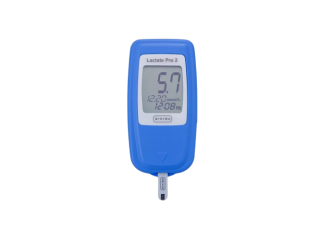
Milk hydrometers (lactometers) - quick check of milk density and quality
Milk hydrometers, or lacto-meters, are simple and effective devices for determining the density of milk and detecting its dilution with water. Such a milk hydrometer is widely used in farms, reception points and laboratories. In this category you can buy a milk hydrometer with delivery across Ukraine for quick quality control of dairy products.
In practice, a lacto-meter is one of the simplest and most affordable ways to check milk without complex equipment. That is why this tool remains popular even with the availability of modern analyzers.
Who are hydrometers (lacto-meters) for milk suitable for
Milk hydrometers are used in farms, dairy farms, cooperatives and reception points. This is a basic tool for quickly checking the quality of milk without a laboratory.
From the practice of farmers, regular use of a lacto-meter for milk allows you to immediately detect dilution with water or deviations in the composition. This is especially important before handing over milk for processing.
At reception points, a milk hydrometer is used to quickly check products before purchasing. Density is one of the key indicators of naturalness.
How a lacto-meter (milk hydrometer) works
A lactometer is a type of hydrometer that measures the density of a liquid. The principle of operation is very simple: the device is immersed in milk, and its density is determined by the level of immersion.
If the milk is diluted with water, its density decreases, and the device is immersed deeper. This allows you to quickly detect falsification.
That is why a hydrometer for determining the density of milk is a basic quality control tool.
Why is the density of milk important
The density is directly related to the composition of milk. It depends on the content of fat, protein and dry matter.
In practice, this means:
- reduced density - possible dilution with water;
- normal density - high-quality milk;
- deviations - problems with feeding or animal health.
That is why lacto-meters for milk testing are actively used in the daily work of farmers.
Advantages of hydrometers (lacto-meters)
- Instant result without electronics
- Easy to use
- Compact size
- Low cost
- Milk quality control in the field conditions
- Suitable for cow and goat milk
- Reliability and durability
This makes buying a lacto-meter a logical solution for any farm.
Technical specifications
- Type of equipment: hydrometer for milk (lacto-meter)
- Purpose: determination of milk density
- Principle of operation: measurement of liquid density
- Type of construction: glass hydrometer
- Material: laboratory glass
- Scale: lactometric scale
- Method of use: immersion in milk
- Type of milk: cow, goat
- Complete set: lactometer or set
- Warranty: depending on the model
Application of hydrometers for milk
Lactometers are used for daily monitoring of milk quality after milking. This allows you to quickly assess its condition and identify problems.
At milk collection points, a milk hydrometer helps determine whether the product has been diluted.
On farms, it is a basic control tool before storage or sale.
Due to its simplicity and speed, lacto-meters remain one of the most common devices for testing milk.
Typical errors in use
The most common error is measuring milk at the wrong temperature.
It is also important to use clean utensils and read the indicators correctly.
Another problem is the use of damaged devices.
Delivery and payment
You can buy a milk hydrometer with delivery throughout Ukraine. The catalog presents lacto-meters for farmers and laboratories.
Delivery is carried out to all regions of Ukraine through popular transportation services.
Available payment by cash on delivery or non-cash payment.
SEO-FAQ
What is a lacto-meter?
This is a hydrometer for determining the density of milk.
Why do you need a hydrometer for milk?
To check the quality and detect dilution with water.
Is it suitable for goat milk?loka?
Yes, suitable for different types of milk.
How to use a lactometer?
Immerse in milk and read the reading.
Is this method accurate?
Yes, for basic milk quality testing.