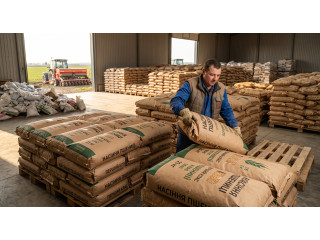
Salt for animals - meaning, types and the right choice for the farm
Salt for animals is one of the basic, but critically important elements of the diet in any farm. Despite the simplicity of the product, it is precisely on the correct provision of animals with salt that metabolism, appetite, productivity and general health depend. In practice, salt deficiency is often not noticed immediately, but its consequences appear gradually: reduced milk yields, slow growth, digestive disorders and even changes in animal behavior.
Many farmers underestimate the role of salt, considering it a secondary additive. But if you look deeper, salt is not just an "additive", but a necessary component for maintaining water-salt balance and normal functioning of the body. That is why the right choice and organization of access to salt are mandatory for any farm.
Why salt is necessary for animals
Salt (sodium chloride) performs several key functions in the animal body. It regulates metabolism, maintains fluid balance, affects the functioning of the nervous system, and promotes normal digestion.
In real farm conditions, animals receive some of their minerals from feed, but this is often not enough. This is especially true for pastures, where the composition of the soil may be poor in sodium. In such cases, animals instinctively look for sources of salt: they lick the ground, objects, equipment, or even farm structures.
This is a direct signal that the body lacks minerals. If normal access to salt is not provided, animals begin to experience stress, their appetite and productivity decrease.
What happens if animals lack salt
Salt deficiency does not always manifest itself instantly. But in the long term, it has clear consequences.
Main problems:
- decreased milk yield in cows;
- slow weight gain;
- poor appetite;
- digestive disorders;
- general weakness;
- changes in behavior (animals begin to lick foreign objects).
In the practice of farmers, a situation often occurs when productivity drops for no apparent reason. And only after analyzing the diet does it turn out that the animals did not receive enough salt. After restoring the mineral balance, the indicators quickly improve.
Types of salt for animals
Salt for animals is presented in several main forms. Each of them has its own characteristics and is suitable for different conditions of use.
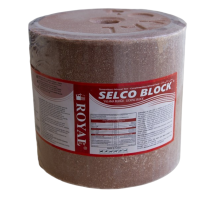
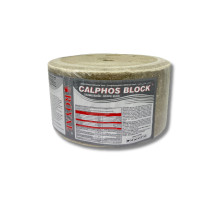
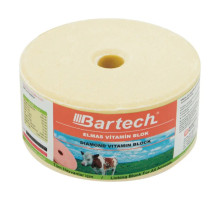
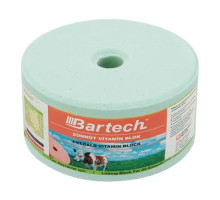
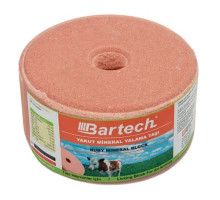
Lick salt (briquettes)
This is the most popular option in modern farms. The salt is pressed into solid blocks that animals can lick as needed.
The main advantage is that the animal regulates its consumption itself. This allows you to avoid both a deficit and a surplus.
Such briquettes are convenient to use on pastures, in pens and on farms. They are consumed slowly and do not require constant control.
Loose salt
Loose salt is added directly to feed or water. It allows for more precise dosage control, but requires attention and regular control.
This option is often used in large farms where the ration is formed centrally.
The disadvantage is the risk of dosage errors. Excess salt can be as dangerous as its deficiency.
Mineral blocks
This is an improved version of licks, which contains not only salt, but also additional trace elements: calcium, magnesium, zinc, selenium and others.
Such blocks are especially useful in regions with poor soils or with intensive livestock farming.
They allow you to solve the problem of deficiency of several elements at once.
Salt for different animals: features of use
Salt for cows
Cows need stable access to salt, especially during lactation. It affects milk yield, appetite and the general condition of the animal.
In practice, the most convenient option is a salt lick, which allows the animal to independently regulate its consumption.
Salt for sheep and goats
These animals also need minerals, but it is important to consider that some elements (for example, copper) can be dangerous for sheep in large doses.
Therefore, it is better to use specialized blocks adapted specifically for these types of animals.
Salt for horses
Horses actively lose minerals through sweat, especially during physical exertion. Therefore, salt is mandatory for them.
Most often, licks are used or salt is added to the diet.
Salt for pigs
Pigs need salt in their diet, but it is important not to exceed the dose. It is usually added to compound feed in controlled amounts.
Typical mistakes when using salt
The most common mistake is a complete lack of control. The farmer simply puts the block in place and does not pay attention to how the animals use it.
The other extreme is incorrect dosage when using loose salt.
The conditions of detention are also often not taken into account. For example, in open pastures, salt can wetyou and lose shape.
Another mistake is using low-quality or technical salt that is not intended for animals.
How to choose salt for animals
The right choice depends on the type of farm, the number of animals, and the conditions of keeping.
Main criteria:
- form (lick or loose);
- availability of additional minerals;
- ease of use;
- storage conditions;
- product quality.
For most farms, the optimal solution is licks or mineral blocks, as they are easy to use and do not require constant monitoring.
Practical summary
Salt for animals is not a trifle, but an important element of the feeding system. It directly affects the productivity, health and behavior of animals.
The correct approach is to ensure constant access to high-quality salt, take into account the type of animal and its conditions of detention, and avoid extremes in dosage.
In the long term, this gives stable results: better milk yields, faster growth and fewer health problems.
SEO FAQ
Why do animals need salt?
Salt regulates metabolism, maintains water balance and affects animal productivity.
Which salt is better for cows?
The most convenient option is salt lick or mineral blocks.
Can animals be given regular salt?
It is better to use special feed salt that meets animal standards.
How understand that the animal lacks salt?
Animals start licking objects, appetite and productivity decrease.
Is it possible to overdose on salt?
Yes, especially when using loose salt. Therefore, it is important to control the dosage.