Belt conveyor: how to choose a conveyor for grain, sand, gravel and industrial production
Belt conveyors are used in virtually every industry where large volumes of materials need to be moved quickly, continuously, and cost-effectively. They operate in grain silos, elevators, quarries, construction sites, warehouses, and production lines.
However, an incorrectly selected conveyor can cause constant stops, increased electricity consumption, rapid belt wear, and expensive repairs. Therefore, before purchasing, it is important to understand what types of conveyors exist, how their performance is calculated, and what characteristics you should pay attention to.
What is a belt conveyor and how does it work?
Belt conveyor — is a conveying equipment designed for the continuous movement of bulk, piece or piece goods along a given trajectory.
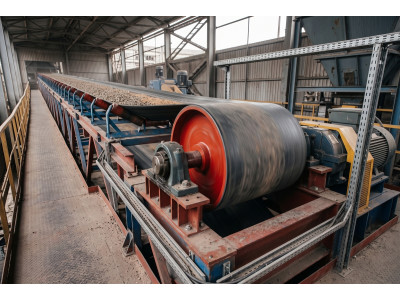
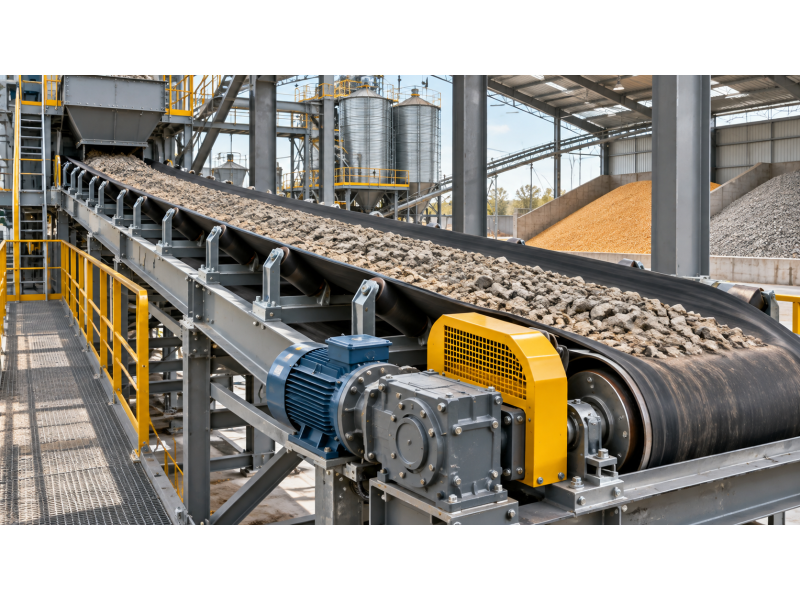
Its main working element is a closed conveyor belt, which is driven by an electric drive and a system of drums. The material is fed onto the moving belt, transported to the unloading point and transferred to the next section of the production line.
Main design elements:
- Conveyor belt - directly moves the load.
- Drive drum - Transmits traction from the engine.
- Tension mechanism - Provides the necessary tape tension.
- Conveyor rollers — support the tape and ensure its movement.
- Metal frame - serves as the supporting structure of the equipment.
- Electric motor and gearbox - Provide a given transportation speed.
- Loading and unloading devices - Direct the flow of material.
Depending on operating conditions, the structure can be additionally equipped with protective covers, belt cleaners, drift sensors, emergency stop and automatic control systems.
Where are belt conveyors used?
One of the reasons for the popularity of belt conveyors is the ability to adapt the equipment to various production tasks.
Agriculture and elevators
In the agricultural sector, conveyors are used to move wheat, corn, sunflower seeds, seeds, feed, and other agricultural products.
Belt conveyors are especially useful for loading grain silos, moving crops between processing areas, and organizing automated raw material supply.
An important advantage is relatively gentle grain transportation, provided that the loading units are properly designed and the belt speed is selected.
Quarries and production of building materials
In quarries, belt conveyors are used to transport crushed stone, sand, gravel, ore and other heavy materials.
Here, the equipment is subjected to high mechanical loads, so the strength of the metal frame, the wear resistance of the belt, the quality of the rollers, and the reliability of the bearing assemblies are especially important.
Industry and warehouses
In manufacturing plants, conveyor systems help automate the movement of raw materials, parts, packaging, and finished products.
They allow you to combine several technological operations into a continuous line, reduce the amount of manual loading and unloading work, and increase the stability of the production process.
How to choose the right belt conveyor: 7 main parameters
When choosing equipment, you should not focus solely on the cost or length of the conveyor. Even seemingly similar conveyors can differ significantly in performance, resource, and operating conditions.
1. Type of transported material
First of all, it is necessary to determine the characteristics of the cargo.
For grain, minimizing product damage and preventing wake-up are important. For crushed stone, abrasion and impact resistance. For wet materials, anti-sticking and effective belt cleaning are important.
It is also necessary to consider the particle size, bulk density, moisture content and temperature of the material.
2. Conveyor performance
Capacity is how much material a conveyor can move in a given amount of time. For bulk materials, this is usually expressed in tons per hour.
The performance is affected by the width and speed of the belt, the shape of its working surface, the cross-sectional area of the flow, and the bulk density of the load.
Insufficient capacity creates a bottleneck in the entire production line. Too much inventory, on the other hand, can lead to unnecessary equipment costs.
3. Conveyor length
The length of transportation affects the frame design, drive selection, tensioning mechanism, and overall system cost.
The design takes into account not only the distance between the loading and unloading points, but also the available space, installation height, support location and maintenance capabilities.
4. Conveyor belt width
The width is chosen taking into account the required productivity and material characteristics.
A narrow belt is suitable for relatively small flows, while transporting significant volumes of bulk materials may require a wider design.
However, increasing the width is not always the optimal solution: it is necessary to take into account the speed, load, and stability of the material on the belt.
5. Tilt angle
Horizontal conveyors are usually easier to operate, but in many enterprises, material needs to be moved to a certain height.
The maximum allowable inclination angle depends on the characteristics of the load, the type of belt and the design of the conveyor.
For some materials, special corrugated belts, crossbars, or sidewalls are used.
6. Quality of rollers and drums
Rollers and drums directly affect the stability of belt movement, movement resistance and equipment life.
Particular attention should be paid to the quality of bearings, protection against dust and moisture, manufacturing accuracy, and strength of parts.
In harsh operating conditions, savings on these components often result in additional maintenance costs.
7. Operating conditions
It is necessary to determine in advance where the conveyor will be installed: inside the building or in an open area.
Important factors are dustiness, humidity, ambient temperature, duration of operation and the need to protect the equipment from atmospheric influences.
A conveyor designed for a closed dry room is not always suitable for 24-hour operation in a quarry.
How to calculate the productivity of a belt conveyor?
For a preliminary estimate of the mass throughput of a conveyor, the following formula can be used:
Q = 3600 × A × v × ρ
Where:
- Q - productivity, t/h.
- A - Actual cross-sectional area of the material flow on the belt, m².
- v - Belt speed, m/s.
- ρ — bulk density of the transported material, t/m³.
For example, if the cross-sectional area of the flow is 0.02 m², the belt speed is 1 m/s, and the bulk density of the material is 1.5 t/m³, the calculated productivity will be equal to 108 t/h.
This is a theoretical estimate. To select a real conveyor, it is necessary to additionally take into account the angle of inclination, loading characteristics, feed unevenness, size of material pieces and other limitations.
The final calculation of equipment is best performed based on the technical specifications and conditions of specific production.
Why does the conveyor belt wear out quickly?
Even high-quality equipment can fail prematurely if used improperly.
Among the most common causes of accelerated wear:
- Incorrect conveyor belt tension.
- Skewness of drums and roller supports.
- Jamming or increased resistance to rotation of rollers.
- Abrasive material getting between the belt and the drums.
- Impact loading with large pieces of material.
- Conveyor loading.
- Wrong choice of tape type.
Constant lateral displacement of the tape is especially dangerous. It leads to damage to the edges, increased friction and additional load on the structure.
Regular inspection of rollers, drums, tension and condition of cleaners allows for timely detection of malfunctions and prevention of serious breakdowns.
Ready-made or custom-made conveyor: which is more profitable?
A standard belt conveyor may be a suitable solution for simple tasks with typical operating conditions.
But if a company works with heavy, abrasive, wet, or non-standard loads, custom design often turns out to be a more rational option.
A conveyor manufactured to specific production requirements allows for pre-agreement of the working width, length, drive power, support design, belt type, and loading points.
In Ukraine, the CONROL plant offers the production of such equipment. The company manufactures belt conveyors for agricultural enterprises, quarries and industry, as well as conveyor rollers, drive and tension drums and other components.
You can learn more about the equipment and manufacturing capabilities according to individual technical requirements on the page conrol.com.ua/produktsiya/strichkovi-konveyeri/.
Frequently asked questions about belt conveyors
Which is better: a belt or a screw conveyor?
The choice depends on the material and the technological task. Belt conveyors are well suited for transporting various goods over considerable distances. Screw conveyors are often used for dosing and moving bulk materials along relatively compact routes, including in closed enclosures.
Can I use one conveyor for grain and crushed stone?
Technically, there are designs that can handle different materials. However, grain and crushed stone differ significantly in density, abrasiveness, and transportation requirements. Therefore, the versatility of the equipment must be confirmed by calculations, and not only by the ability to install the appropriate belt.
What determines the price of a belt conveyor?
The cost is formed based on the length, width, productivity, drive power, metal content of the structure, type of belt, quality of components and additional equipment. Non-standard dimensions and difficult operating conditions also affect the price.
How to increase the service life of the conveyor?
The most effective measures are proper loading, timely cleaning, belt tension control, roller and bearing maintenance, eliminating misalignments, and preventing overloads.
Conclusion
A properly selected belt conveyor is not just equipment for moving materials, but an important element of production infrastructure.
The continuity of the enterprise's operation, electricity costs, maintenance costs, and the number of unscheduled stops depend on its design, performance, and quality of components.
Therefore, when choosing a conveyor, it is worth evaluating not only the initial cost, but also the real operating conditions, technical characteristics, and future equipment maintenance costs.
Competent engineering calculations and high-quality manufacturing allow you to obtain a reliable transport system that will operate effectively for many years.