Electric Butter Churns: How to Assess Whether a Purchase Is Worthwhile
Producing your own butter is a logical step for any farm with access to whole cow's or goat's milk. Selling raw milk often brings minimal profit, whereas processing milk into products with high marketability significantly increases farm profitability. To simplify this process and make it as hygienic as possible, electric butter churns are used. They automate the most labour-intensive stage — churning the cream.
When planning the development of their own farm, farmers often order a range of LIVESTOCK FARMING EQUIPMENT that helps automate routine processes. Among this equipment, milk-processing devices occupy a special place, as the quality of the finished product depends directly on precise adherence to the technology and the reliability of the machinery.
In this article, we will examine in detail how modern electric butter-churning devices work, assess their productivity, analyse the factors affecting payback, and determine when investing in equipment is fully justified and when it is better to refrain from purchasing it.
Investment Factors: What Determines the Cost of the Equipment
When choosing a butter-churning device, buyers face a wide range of prices and specifications. The main factors affecting the initial investment and subsequent operating costs are:
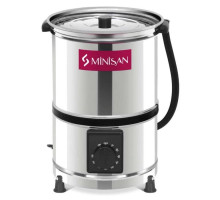
- Body and working chamber material. A stainless steel butter churn is considered the most durable and hygienic option. Food-grade stainless steel does not react with dairy acids, is easy to clean, does not absorb foreign odours and has an unlimited service life. Plastic alternatives are cheaper, but they are more susceptible to mechanical damage and may accumulate microcracks over time, where bacteria can multiply.
- Loading capacity. Catalogues offer models with different capacities, for example, 20, 50 or 60 litres. It is important to remember that the working volume is usually between 40% and 70% of the tank's total volume. This is necessary for free mixing and oxygenation of the mass.
- Drive and transmission type. Models with belt drives operate more quietly and provide a smooth start. With these devices, it may periodically be necessary to replace the butter churn belt, which is a standard maintenance procedure. Direct-drive models have fewer moving parts but require more precise balancing.
- Working element design. A special butter churn propeller creates optimal hydrodynamic flows in the chamber, ensuring rapid separation of butter granules from buttermilk. The shape and blade angle of the propeller directly affect churning speed and finished product yield.
Productivity and the Technological Benefits of Automation
Using electric equipment fundamentally changes the approach to processing cream compared with manual labour. The main benefits are consistent results and a high operating speed.
Process Speed and Time Savings
Manual butter churning can take hours and requires considerable physical effort. An electric device completes the task in 15–40 minutes, depending on the cream's fat content, temperature and loading volume. This frees the farmer's time for other important tasks on the farm.
Temperature Control
For successful churning, the cream should have a temperature of 11–15°C. Thanks to the high rotation speed provided by modern-design motors, the process is completed before the cream has time to become excessively heated by friction or the ambient temperature. This makes it possible to obtain dense butter granules that are easy to wash.
Finished Product Yield
The average butter yield is approximately 35–45% of the weight of the original cream, when the cream has a fat content of approximately 30–35%. Using high-quality electric butter churns minimises fat losses, which can remain in the buttermilk when churning is carried out inefficiently by hand.
Payback Calculation (Break-Even): The Economic Rationale
To understand whether purchasing professional equipment will pay off, it is necessary to compare the investment cost with the potential additional income. Let us examine the calculation logic using an average farm as an example.
Costs
When purchasing equipment, the owner incurs the following costs:
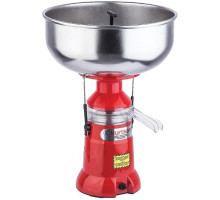
- A one-off investment in purchasing the device, for example, a Sahbaz stainless steel model.
- Operating costs: electricity (motor power is usually low, so electricity costs are minimal), water for washing the butter and cleaning products.
- Depreciation and periodic repairs: replacement of worn parts such as the butter churn belt or seals.
Income and Benefits
Additional profit is generated by the difference between the selling price of the finished butter, together with the by-product — buttermilk — and the market value of the raw milk or cream used for production. Since butter is a product with high added value, each litre of milk processed generates considerably more net income than selling the raw material to intermediaries.
Example of a Viability Calculation
If a farm obtains 30–50 litres of milk per day, selling it in raw form is often unprofitable because of low purchase prices. Separating this milk and subsequently churning the cream makes it possible to produce several kilograms of high-quality homemade butter each week. With regular sales of the finished product to private customers or through local markets, capital investment in medium-capacity equipment pays for itself within just a few months of active use.
When Buying an Electric Butter Churn Is Not Justified
Despite the benefits offered by electric butter churns, there are situations in which purchasing this equipment will not provide the expected financial benefit:
- Minimal raw material volumes. If you have only one cow or several goats and the daily yield does not exceed 5–10 litres, the volume of accumulated cream will simply be insufficient for a large device to operate properly. In this case, it is better to use small manual models or household kitchen appliances.
- No established sales channels. Butter is a product that requires suitable storage conditions, such as a refrigerator or freezer. If you cannot sell the finished product quickly or ensure its long-term storage, investment in equipment may tie up your working capital.
- Selling whole milk as the main business model. If your farm focuses on supplying fresh drinking milk to regular customers at a favourable price, allocating resources to separating and churning butter may be economically unprofitable because of the additional time and labour required.
Equipment Maintenance and Care
To ensure that the equipment serves for years without serious breakdowns, you should follow simple care rules and carry out maintenance on time.
Hygienic Cleaning
Immediately after the churning process has finished and the buttermilk has been drained, the working chamber must be thoroughly washed with hot water and food-safe cleaning products that effectively break down fat. Particular attention should be paid to the area where the butter churn propeller is installed, as fat residue in gaps can become a source of unpleasant odours and bacterial contamination during subsequent use.
Checking Mechanical Components
In belt-driven models, the transmission tension may loosen over time. If you notice a reduction in rotation speed or a characteristic squeal during operation, the butter churn belt may be worn or stretched. Replacing it is a simple procedure that can be carried out independently without involving specialist service centres.
Storage
After washing, all parts of the device must be thoroughly dried. The equipment should be stored in a dry room protected from dust and direct sunlight, with the lid open to prevent a stale odour from developing inside the working chamber.
Common Selection and Operating Mistakes
To avoid disappointment with your purchase, pay attention to the typical mistakes made by beginners:
- Incorrect loading capacity. Attempting to churn 2 litres of cream in a 50-litre butter churn will cause the propeller simply to splash the mass onto the tank walls, preventing the churning process from taking place. Always choose the equipment capacity according to your actual production volumes.
- Incorrect cream temperature. Cream that is too cold, below 8°C, takes a very long time to churn, while cream that is too warm, above 18°C, quickly turns into a liquid mass from which quality butter cannot be formed. The optimum range is 11–15°C.
- Ignoring material quality. Trying to save money by purchasing the cheapest device made from thin plastic often leads to cracks appearing quickly and fastener failure under vibration. A reliable stainless steel butter churn costs more, but fully justifies its price through its reliability and long service life.
Frequently Asked Questions (FAQ)
What cream fat content is optimal for churning butter?
The best option is cream with a fat content of 30% to 38%. Cream that is too thin will take considerably longer to churn, while cream that is too thick, above 45%, may clog the working components and overload the motor.
Can butter be churned from fresh milk without separation?
No, it is impossible to churn butter directly from whole milk in a butter churn. The milk must first be passed through a separator to separate the cream, which is then used to make butter.
What should I do if the butter takes a long time to form?
The most common cause is an incorrect cream temperature: it is either too cold or too warm. Also check the fat content of the raw material. If the cream is too thin, the process may take longer. Make sure that the motor speed is stable and that the drive belt is not slipping.
How often should the belt be replaced in belt-driven models?
The belt's service life depends on how intensively the equipment is used. With regular domestic use, the belt may need replacing every 1.5–3 years on average. Signs of wear include slipping, squealing during start-up or visible cracks in the rubber.
Why is a stainless steel butter churn better than a plastic one?
Stainless steel is chemically neutral, does not absorb fat or odours, and is easy to disinfect with hot water and steam. It is resistant to impacts, scratches and corrosion, ensuring maximum hygiene for the finished food product throughout the device's service life.

0 reviews / Write a review