Why do sheep and goats need constant access to water?
Sheep and goats must have constant access to fresh, clean drinking water. Restricting water can reduce feed intake, productivity, and the general condition of the animals. Therefore, a drinking bowl on the farm is not a secondary accessory, but part of the daily organization of maintenance.
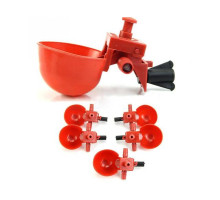
For a small yard, farm or a separate group of animals, it is worth choosing not only the capacity of the bowl. The method of water supply, the number of watering points, installation conditions, available pressure in the pipeline and the possibility of regular cleaning are important. In the category of livestock products, you can choose equipment for various operations on the farm, and among the current items is a plastic drinker for sheep and goats with a tubular valve.
Below we will look at when plastic drinkers for sheep and goats are appropriate, how they differ from open containers and metal structures, and what you need to check before buying.
Plastic drinker, open container or metal model
In everyday life, water for animals is sometimes poured into buckets, troughs, or other open containers. This is a simple option that does not require a pipe connection, but it depends on the regularity of manual filling. Food, litter, and dirt can easily get into an open bowl, so the water condition should be monitored frequently.
A plastic cup drinker with a valve works differently: water is supplied when the animal presses the valve. This arrangement helps reduce overflows and water loss compared to a permanently open container. At the same time, the drinker must be properly connected and the valve must be accessible for inspection and cleaning.
Metal construction may be appropriate where increased mechanical strength is required, but specific characteristics depend on the material, thickness and design. Plastic models are lighter than metal and do not rust. For standard sheep and goat housing conditions this may be a practical advantage, but the quality of the polymer, UV resistance, wall thickness and impact resistance should be checked in the description of the selected model.
Comparison by usage scenarios
- Bucket or trough. Suitable for temporary watering, small numbers of animals or areas without running water. Requires manual filling, cleanliness monitoring and checking that the container does not tip over.
- Plastic cup drinker. Suitable for a permanent watering place, if there is a possibility to bring water. The valve limits the flow during drinking, but requires compatible pressure, filtration and maintenance.
- Metal drinker. May be considered for conditions with increased risk of impact or gnawing. Before choosing, you should evaluate weight, corrosion protection, mounting method, and availability of components.
There is no universal option for every facility. For a pasture without a fixed water supply, an open tank may be simpler, while for a pen near a farm, a valve model may be more convenient in daily use. The decision depends on the number of animals, the layout of the facility, and the method of water supply.
Advantages of plastic drinkers for sheep and goats
Light weight and no rust
Plastic is lighter than metal, so installing and moving the bowl usually does not create such a load on the fasteners. The material does not rust, which is important in a damp room or with regular contact with water. However, this does not mean that any plastic bowl will withstand a strong impact or prolonged exposure to the sun: the relevant properties must be checked according to the manufacturer's specifications.
Water supply control
A valve system delivers water when the animal presses down. This can reduce overflow and water loss compared to a trough where the water is always open. This advantage only applies if it is installed correctly: if the valve becomes clogged, leaks or the system is under-pressure, the animals may not receive water regularly.
Suitability for standard conditions of detention
The Ukrainian market offers plastic bowl models for cattle, goats and sheep. Among the options are designs with a bowl capacity of 3 liters, horizontal installation and connection to the pipe via a 3/4 inch thread. These parameters cannot be automatically transferred to each model, so before ordering, you should check the capacity, thread and connection diagram.
Limitations of plastic models and when they are not suitable
A plastic waterer does not eliminate all economic risks. It may be unsuccessful for a particular location if it cannot be securely fastened, if the water is supplied at an inappropriate pressure, or if the design is not designed for local temperature conditions.
- Frost. The plastic bowl and piping can freeze in the winter. The method of protection against ice is selected taking into account the temperature, access to electricity and the design of the system.
- Ultraviolet and impact. Resistance to sunlight and mechanical stress depends on the quality of the polymer, wall thickness and design. If this data is not specified, it must be clarified before purchase.
- Dependence on water supply. A valve drinker requires sufficient pressure, as well as the desired filtration system. A clogged valve can stop the water supply.
- Competition between animals. One small bowl will not always provide equal access for the entire group. Horned and hornless animals, young animals and adults may require separate assessment of the number of watering points.
If the farm does not have a stable water source or there is no way to protect the pipeline from freezing in winter, it is worth comparing the valve model with a mobile open tank. In such a situation, it is more important to ensure the constant availability of clean water than to choose a more complex system.
How to choose a drinking bowl based on the number of animals
The size and number of waterers should be selected according to the size of the group. A bowl that is too small or not enough water points can create queues and unequal access to water. This is especially important when animals of different ages, sizes or physiological conditions are kept in the same pen.
What to evaluate before calculating
- how many sheep and goats will use the system at the same time;
- whether they are kept in one group or divided into squads;
- are there pregnant, lactating animals and young animals;
- can stronger individuals block the approach to the bowl;
- how often can staff check the drinker;
- Is there a place for cleaning and repairs?
The exact daily water requirement is not a fixed norm. It is influenced by temperature, feed composition, physical activity, pregnancy, growth and lactation. For goats in maintenance conditions, the Merck Veterinary Manual gives a guideline of 1.5–3.3 liters of water per day, but during lactation the requirement increases. In hot weather, when actively grazing or feeding dry hay, animals may need significantly more water.
Therefore, you should not choose a bowl based on its volume alone. Even a spacious drinker is no substitute for a sufficient number of access points if the animals are competing with each other. For a large group, it is better to evaluate the system as a whole: the number of bowls, their location, the capacity of the valves and the possibility of quick filling.
Pipeline compatibility and installation
Before ordering, you need to compare the outlet of the drinker with the existing pipeline. Check the type of connection, diameter and thread, direction of water supply, the possibility of installing a shut-off element and access to the valve. If a specific model has a 3/4 inch thread, this does not mean that it will fit any pipe without an adapter.
Practical verification procedure
- Determine the installation location and the height at which the animals can comfortably approach the bowl.
- Find out from which side the water will be supplied - horizontally, vertically, or through an adapter.
- Check the declared operating pressure and filtration requirements if they are listed in the specifications.
- Provide the ability to shut off the water without dismantling the entire system.
- After connection, check that the valve opens, that the bowl fills without overflowing, and that there are no leaks.
- After a certain time, re-inspect the threaded connections and fasteners.
Valved automatic drinkers require regular inspection for leaks and clogging. If the water contains mechanical impurities, filtration helps reduce the risk of particles entering the valve, but the specific system requirements should be specified for the selected model.
Water quality, purification and daily monitoring
A clean bowl does not compensate for unsuitable water. For goats, the Merck Veterinary Manual considers water with a total dissolved solids content below 1000 mg/L safe for all livestock, and recommends avoiding water with a total dissolved solids content above 10,000 mg/L. The sulfate content of drinking water for goats should be below 500 mg/L.
If the water is of questionable composition, it should be tested before connecting a permanent system. This is especially true for wells and springs, the characteristics of which may differ from tap water. You should also check the data sheet of a specific drinking bowl to see if the material is declared suitable for contact with drinking water.
Basic care
- Check the water availability and general condition of the bowl daily;
- remove feed, bedding, manure and visible dirt;
- check if the valve is leaking after filling;
- make sure that the animal can freely press the valve;
- periodically rinse the bowl and accessible connection parts;
- In hot weather, high dust levels, or frequent food spillage, clean the drinker more often.
Daily cleaning is a practical guideline, not a hard and fast rule for any enclosure. The frequency will depend on temperature, dust, feeding habits and cleanliness of the enclosure. If the water becomes cloudy quickly or sediment accumulates in the bowl, the cleaning interval should be shortened.
Plastic or metal drinking bowl: how to estimate costs
You should compare prices not only based on the cost of the bowl. Total costs may include fasteners, adapters, a filter, pipework, frost protection, valve repairs and service time. The exact price and scope of delivery depend on the specific model, so you should check the product card.
A plastic model can be practical if low weight, no rust and easy installation in a standard pen are important. A metal structure can be considered for a place with high mechanical load, but its weight, possible corrosion and maintenance features must be taken into account. An open trough has a lower technical complexity, but requires manual control of the water level and more frequent cleaning of contaminants.
For a small farm, it is advisable to first determine the real operating scenario and only then compare materials. If water is supplied to the pen, a valved plastic bowl can reduce overflows. If there is no water supply, an autonomous tank may be simpler regardless of the material.
Common mistakes when buying and using
- Choose only by price. A cheaper model may require additional adapters or may not meet installation conditions. Compare the package, thread and system requirements.
- One drinker for too large a group. Even a functioning bowl will not solve the problem if some of the animals cannot approach it without queuing.
- Ignoring winter conditions. The water in the bowl and pipe can freeze. Protection should be planned before installation, not after the first frost.
- Lack of filtration. Sand and mechanical impurities can cause the valve to clog.
- Unverified polymer quality. Before purchasing, check the resistance to ultraviolet light, shock, frost, and suitability for contact with water.
- There is no backup plan. In case of a valve failure or water shutoff, you need to have a way to quickly provide water to the animals.
Who are plastic drinkers for sheep and goats suitable for?
Plastic sheep and goat drinkers are suitable for farms where there is a permanent place of detention, the possibility of connection to a water supply and the need to reduce manual filling of open containers. They are also suitable for buyers for whom light weight and lack of rust are important.
Before buying a drinker for sheep and goats, check the number of animals, indoor conditions, available water pressure, type of thread, bowl material, frost resistance, and package. For delivery across Ukraine, it is important to clarify the dimensions and composition of the set, especially if additional fittings or fasteners are required.
If you have multiple animal species on your farm, it is best to choose a drinker that is specific to the group, rather than a generic name. Water should be accessible to both goats and sheep without blocking the passage, tipping the bowl over, or constantly coming into contact with dirty bedding.
Frequently asked questions from buyers
Is one plastic drinker enough for a herd?
This depends on the size and composition of the group. The size and number of watering points should be selected so that there are no queues and unequal access. For horned and hornless animals, young animals and adults, the number of points is estimated separately.
Can I connect a drinking bowl to any pipe?
No, compatibility must be checked by thread, diameter, connection direction and working pressure. For models with a declared 3/4" thread, a suitable fitting or adapter may be required.
Is a waterer with a valve suitable for winter use?
The plastic bowl and pipeline can freeze. The frost resistance of a particular model should be checked in the specifications, and the method of protection should be selected based on the temperature, system design, and access to electricity.
How often should you clean the bowl?
The drinker should be inspected regularly and cleaned of feed and debris. In hot weather, high dust levels, or when manure is present, cleaning may be required more often than once a day.
Is highly mineralized water safe for goats?
For goats, the Merck Veterinary Manual provides a guideline: water with a total dissolved solids content below 1000 mg/L is considered safe for all livestock categories, and water above 10,000 mg/L is recommended to be avoided. Sulfate content should be below 500 mg/L.
See also in the catalog

0 reviews / Write a review