Why do you need an electric shepherd against wild animals?
An electric fence for wild animals is used as a perimeter fence to deter animals from entering a pasture, enclosure, garden, field, or other protected area. The system does not consist only of a pulse generator: for correct operation, conductors, posts, insulators, connectors, gates, and grounding are required.
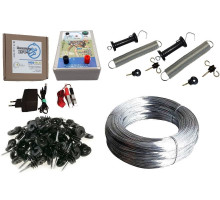
It is worth choosing equipment not by one inscription in the name, but by the entire fence scheme. The type of animal, the length of the perimeter, the number of threads, the type of supports, the available power supply and the condition of the soil are important. For a reference, you can consider the Powerful electric shepherd for wild animals and sheep EPU 5J/10J DUO 230V , but the final choice depends on the configuration of the entire fence.
Below we will analyze who this system is suitable for, what characteristics to check before buying, how to create a package, and what mistakes to avoid.
Who is this fence suitable for?
Electric fencing may be appropriate where it is necessary to limit animal access to a certain area without building a solid fence. The catalog contains separate electric fence kits for sheep, cows, goats, horses, pigs and protection from wild animals. Such a division helps to start the selection from the type of task, but does not cancel the check of the actual length and configuration.
- For pastures, it is important to organize a reliable perimeter and convenient passage through gates.
- For sheep, the smaller size of the animals and appropriate placement of the lower thread must be taken into account.
- To protect a garden or field, you need to assess from which side penetration is possible and which animals are causing the problem.
- For wild animals, a sufficient number of threads, mechanically stable supports and clear fence control are particularly important.
The system does not replace any fence in every situation. If animals can easily jump over the structure, damage the supports, go under the lower wire, or if the area has a lot of undergrowth, one generator is not enough. First, you need to prepare the fence line itself.
Main criteria for choosing a generator
1. Purpose and type of power supply
Start by asking where the generator will be installed and what power is available on site. The catalog includes models that operate on 230 V mains, as well as indicators, testers and accessories for monitoring the fence. For a stationary site near the mains, it is logical to consider a mains-powered option. For a remote area, you need to separately clarify the compatible power supply method of a particular model, and not assume it based on appearance.
The name EPU 5J/10J DUO 230V directly contains the designation of the power supply 230V and the range 5J/10J. These data belong to the name of a specific catalog item. Do not transfer them to other electric shepherd generators without checking the description and instructions.
2. Load margin
The performance of a fence is affected by its length, the number of parallel strands, the humidity of the vegetation, the quality of the insulation and the condition of the connections. The more complex the system, the more important it is not to choose a generator too close. At the same time, an excessively powerful model without a properly mounted fence will not eliminate leaks through grass, damaged insulators or weak grounding.
During the consultation, prepare the following data: perimeter length, number of conductor lines, animal species, type of poles, power source, and presence of dense vegetation. These parameters will help determine whether you need a basic generator or a powerful electric herder for wild animals.
3. Voltage control capability
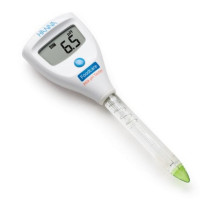
Visual inspection is not enough: the wire may look intact, but have problems with the connection or insulation. For testing, the catalog includes the ELEON electric fence indicator and the Horizont six-level voltage tester for electric fences with a specified range of 2–10 kV. When choosing a tester, check whether its purpose corresponds to your system.
How to choose a fence kit
Conductors for electric shepherd
Wire, cord or tape can be used as a conductor, depending on the design and purpose of the fence. The catalog presents ELEON rope with three cores, as well as connectors for tape, wire and cord. When choosing a material, check its compatibility with the planned insulators and the method of tensioning.
For horses, the catalog includes yellow and white farmer tape 20 mm wide and 200 m long. Such items should not automatically be considered universal for all animals: tape, cord and smooth wire have different installation methods and connection requirements.
Posts for electric shepherd
The supports set the geometry of the fence and hold the conductor at the desired height. For a permanent structure, strong posts are used, for a temporary one, lighter solutions are used, if they meet the conditions of the site. It is important to consider the material of the support: for fiberglass reinforcement, the catalog includes fasteners for diameters of 6, 10 and 12 mm, as well as a universal insulator for reinforcement.
Do not buy fasteners based on the photo alone. Before ordering, compare the diameter and material of the post with the insulator description. Separately presented are insulators for metal posts from 8 to 14 mm with a screw, insulator with metric thread, nail models and insulator with self-tapping screw.
Insulators and fasteners
The insulator must separate the conductor from the support. If it is not selected correctly, the wire can touch the metal or move under tension. For installation on reinforcement, metal posts, wooden supports or other bases, different fastening options are required. A screwdriver bit for screwing in the insulator can simplify installation, but is not a substitute for checking the thread compatibility.
Gates and connections
The passage in the perimeter must be foreseen even before calculating the materials. The gate for the electric shepherd should provide convenient access and not create dangerous sagging of the conductor. Connectors are important at joints and transitions: the catalog includes an electric shepherd connector with tape and a wire and cord connector.
Grounding, installation and system testing
The generator and the fence work as one system, so installation should not be reduced to pulling the wire. You need to install the generator in a suitable place, perform grounding according to the instructions for a specific model, connect the conductors and check the voltage with a tester.
- Remove branches, tall grass, and other objects that could touch the conductor.
- Check for damaged insulators, sagging, and accidental contact with metal parts.
- Make connections reliable and protected from tension.
- After installation, check several points around the perimeter, not just the area near the generator.
- Periodically repeat the inspection after rain, wind, site work, or animal movement.
If the tester shows a problem, move along the line step by step: check the generator output, connections, joints, condition of insulators and conductor contact with vegetation. Replacing the generator without finding the cause often leads to unnecessary costs.
How to choose a system for different scenarios
Protecting sheep from wild animals
For such a task, a fence that will be difficult to bypass from below or damage during the movement of the herd is important. Consider electric sheep guard kits or assemble the system separately: generator, conductors, appropriate posts, insulators, gates and a tester. The height and number of threads should be determined by the terrain, breed of animals and the likely type of intruder, and not by a universal scheme.
Field, garden or berry patch
Here, quick installation, access to the gate, and the ability to regularly remove vegetation under the fence may be of primary importance. For a small area, it may not be practical to purchase a complex, powerful system if the main problem is improper tension or lack of control. First, determine the perimeter and places where animals usually try to pass.
Remote pasture
For remote areas, it is especially important to find out in advance the generator power requirements and the possibility of regular inspection. If it is difficult to get to the site, do not skimp on a tester, connectors and spare insulators. A specific model should be selected according to its instructions, since different types of equipment are available for different products in the provided catalog.
When an electric shepherd is not suitable
Electric fencing may be a poor choice if the owner is unable to maintain the perimeter or the area is constantly overgrown with vegetation. Another approach is also needed when physical containment of the area is required, protection from people, small animals passing through large gaps, or containment of animals that do not respond to the fence properly.
- A lightweight mobile structure may be suitable for temporary passage restriction, but it still needs to be checked regularly.
- For permanent protection against mechanical damage, it is sometimes advisable to combine electric wire with an existing fence.
- To scare away birds, the catalog includes bioacoustic, propane, ultrasonic, visual, and laser solutions, so an electric bird repeller is not always needed.
- For insects, ultraviolet insect killers and lamps are provided, which belong to another type of equipment.
Don't confuse the tasks: an electric fencer is designed to organize an electric fence, while bird repellers or insect killers solve other problems.
Common mistakes when buying
Focusing only on power
Buyers sometimes choose the generator with the highest rated rating but don't consider the quality of the line. Leaks through grass, faulty insulators, and weak connections reduce the efficiency of any system.
Incorrect support diameter
The fasteners for 6, 10 and 12 mm rebar are not interchangeable by default. The same problem occurs with insulators for metal posts: you need to check the range, thread and method of fixation.
Lack of tester
Without a tester, it is difficult to quickly determine where exactly the fault occurred. An indicator or multi-level tester helps to monitor the fence after installation and during operation.
Savings on connections
Twisting conductors in a random manner can be a weak point in the system. If using tape, cord, and wire, select connectors for the specific type of material.
Ordering an incomplete set
A generator without a conductor, insulators, supports and grounding does not form a finished fence. Before placing an order, make a list of all the elements and check what is already on the farm.
Practical selection algorithm
- Determine who needs to be restrained: sheep, cows, wild animals, or another type of animal.
- Measure the perimeter and write down the approximate number of threads.
- Choose the installation location and available power.
- Choose a generator taking into account the length, vegetation, and complexity of the fence.
- Choose a conductor: wire, cord, or ribbon.
- Compare posts and insulators by material, diameter, and mounting method.
- Add gates, connectors, grounding, and a tester.
- Check if you can purchase spare insulators and other necessary accessories.
If you need a ready-made configuration, check with the seller the actual composition of the kit and the compatibility of individual elements. If the system is assembled element by element, it is convenient to first determine the perimeter diagram, and only then calculate the amount of materials.
Care and safe operation
After installation, the fence should be inspected not only on the day of installation. Wind can move the supports, animals can damage the wires, and vegetation can make contact with the conductor. Check the tension, the integrity of the insulators, the joints, and the condition of the passages.
Do not touch the conductors while the generator is operating and do not perform maintenance without following the instructions. Children and unauthorized persons should be explained the purpose of the fence. When purchasing, also clarify the terms of the warranty, delivery in Ukraine, compatibility of components and payment method.
FAQ: answers to customer questions
Is it enough to buy just an electric shepherd generator?
No. The work requires the fence itself, conductors, supports, insulators, connections and grounding. For control, it is worth adding an indicator or voltage tester.
Which conductors should I choose for protection against wild animals?
The choice depends on the fence design and installation method. The catalog includes ELEON cord, horse tape and connectors for different types of conductors. Check the compatibility of the material with insulators and fasteners.
Are electric sheep guard kits suitable for protection against wild animals?
They can be the basis for a fence around sheep, but you need to check the generator, the length of the perimeter, the number of threads and the mechanical stability of the structure. The name of the kit itself does not confirm its suitability for any area.
Why do I need a tester if the generator is working?
The tester allows you to check the fence at different points and detect drops in readings due to damage, vegetation or problems with the joints. This makes troubleshooting easier.
How to buy an electric shepherd for wild animals without making mistakes in the configuration?
Before ordering, prepare the perimeter length, number of strands, type of supports, type of conductor, power source and operating conditions. Then, compare the characteristics of the generator and each accessory with the description of the specific catalog item.
See also in the catalog
Read also
- How to choose an electric shepherd: expert advice and popular models
- How to Choose an Electric Cow Fence: A Complete Guide for Farmers and Cattle Owners
- Pulse generator for electric shepherd - how to choose

0 reviews / Write a review