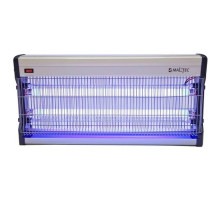
Pulse generator for electric shepherd - operating principle and selection
The pulse generator is the main element of the electric shepherd, which creates short electrical pulses and feeds them into the fence conductor. The length of the electric fence, the force of impact on the animal and the stability of the entire system depend on the generator. A correctly selected generator ensures effective herd control and reliable operation of the fence in any conditions.
Generators are used in electric fencing systems for cows, sheep, goats, horses and pigs. You can view models of different power in the electric fences section.
How does an electric shepherd generator work?
The generator accumulates electrical energy and periodically converts it into a high-voltage pulse, which is transmitted along the fence wire. The pulse has a very short duration and limited energy, so it is safe for animals, but noticeable enough to form a reflex to avoid the fence.
When an animal touches the conductor, the current passes through the body into the ground and returns to the generator through the grounding. If the circuit is closed and the grounding is good, the animal feels the impulse and moves away from the fence.
Generator power - what do joules mean ⚡
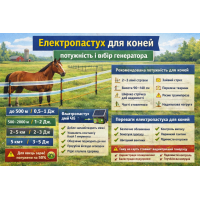
The power of the electric fence generator is measured in joules. This is an indicator of the pulse energy, which determines the force of the impact on the animal and the possible length of the fence. The longer the conductor or the thicker the animal's fur, the more pulse energy is required.
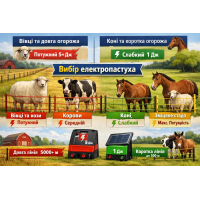
Generators of different capacities are used for different conditions:
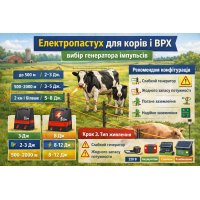
- up to 1 J - short pens and horses;
- 1–3 J — pigs and goats;
- 3–5 J — cows;
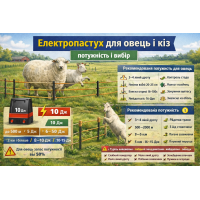
- 5–10 J — sheep;
- 10+ J - long fences.
In farming practice, a generator is always selected with a power reserve to compensate for voltage losses due to the length of the fence, vegetation, and soil moisture.
Types of generators electric shepherd
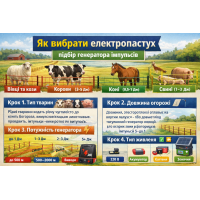
Generators vary in power type and application conditions. The choice depends on the location of the pasture and access to the power grid.
- 220 V mains - for stationary farms;
- battery-powered - for mobile fences;
- solar - for remote pastures;
- combined - universal solutions.
What does the efficiency of a generator depend on?
Generator power is only one factor in the operation of an electric fence. The actual voltage of the fence is affected by the length of the wire, the quality of the connections, the contact with vegetation and the condition of the grounding. Even a powerful generator will not work effectively if it is installed incorrectly.
Good grounding is especially important because it is where the current returns to the generator. Poor grounding is the most common cause of poor performance of an electric fence.
How to choose a pulse generator
Generator selection is based on the type of animal and the length of the fence. Woolly animals such as sheep require significantly more impulse energy than horses. Long pastures also require more power due to voltage losses in the wire.
Therefore, when choosing a generator, it is important to consider:
- animal species;
- length of the fence;
- power type;
- pasture conditions;
- power reserve.
Conclusion
The pulse generator determines the efficiency of the electric shepherd and is selected according to the type of animal and the length of the fence. The thicker the animal's fur and the longer the electric fence, the more pulse energy is required. The correct choice of generator ensures stable voltage, reliable herd control and long-term operation of the system.
You can choose a pulse generator for an electric shepherd in the Fermateh electric shepherds section.
FAQ — Electroshepherd pulse generator
What is an electroshepherd pulse generator?
The pulse generator is a device that creates short high-voltage pulses and feeds them into the conductor of the electric fence. It is it that determines the force of the fence's impact on the animal and the maximum length of the electric shepherd.
How many joules are needed for an electric shepherd?
The power depends on the animals and the length of the fence. For horses, 0.5–2 J is sufficient, for cows 3–5 J, and for sheep, 5–10 J or more is usually required.
Can I put a powerful generator on a small fence?
Yes, a generator with a power reserve works more stably and compensates for voltage losses due to vegetation, humidity, and wire length. This is a normal practice when selecting an electric shepherd.
What is more important - joules or kilometers of fencing?
Joules determine the strength of the pulse, and the length of the fence determines the voltage loss. The effectiveness of an electric shepherd depends on the combination of both parameters, so the generator is selected taking into account both the animals and the length of the fence.

0 reviews / Write a review