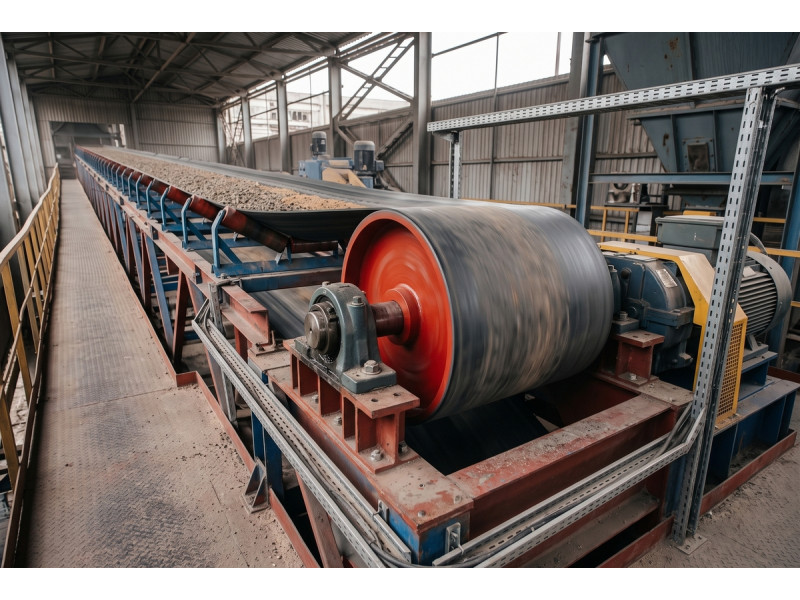
Belt conveyors are the basic equipment for continuous movement of bulk, lumpy and piece materials in agriculture, mining, metallurgy and logistics centers. The reliability and stable performance of the entire route are directly determined by the technical condition of the drive station. The main role in it is played by the drive drum, which converts the torque from the drive into linear movement of the conveyor belt.
Functional purpose and principle of operation
The main task of the drive drum is to transfer traction force to the belt due to friction forces between the contacting surfaces. Insufficient friction coefficient causes slippage, which leads to abrasion of the inner lining of the belt, local overheating and emergency stop of the equipment.
To ensure stable traction force under any operating conditions, it is important to correctly select the shell geometry and the design of the nodes. You can familiarize yourself with the technical parameters and order reliable drive and tension drums at the link: conrol.com.ua/produktsiya/prividni-j-natyazhni-barabani/The equipment is manufactured taking into account the weight of the cargo, the angle of inclination of the conveyor, the type of belt and the climatic conditions of operation.
Design and lining features
The drive drum assembly consists of a number of basic components:
- Case: cylindrical or barrel-shaped steel body with precisely calibrated wall thickness;
- Bottoms (hubs): end flanges that provide structural rigidity;
- Shaft: one-piece axle made of structural or alloy steel, designed for cyclic bending and torsional loads;
- Bearing supports: Housings with reliable labyrinth seals that protect the lubricant from moisture and dust.
To increase traction in wet, clay or dusty environments, the drum surface is lined. Rubber or ceramic-rubber plates with a notch ("chevron" or "rhombus") effectively remove dirt from the contact area, prevent slipping and protect the metal of the housing from premature corrosion and abrasive wear.
Selection criteria for conveyor modernization
- Drum diameter: is selected based on the number of fabric pads or the diameter of the steel cables of the belt to prevent fiber breakage during bending.
- Custom width: should exceed the width of the belt by 100–200 mm for safe movement of the web in case of possible deviations.
- Shaft mounting type: The use of keyless conical clamping couplings greatly simplifies the dismantling and replacement of the shaft without the risk of cracks appearing on the welds of the bottoms.
- Balancing: Dynamic balancing eliminates frame vibrations, extending the life of the support rollers and electric motor.
When equipping new lines or renovating existing production facilities, it is important to choose certified parts from trusted manufacturers. A full catalog of conveyor equipment, rollers, and components is available on the manufacturer's official website: https://conrol.com.ua.