.jpg "Sheep Shearing. When and How to Shear Sheep")
Sheep shearing. When and how to shear sheep
Shearing is a very important production process in breeding and keeping sheep of all productivity areas. Timely and correct shearing of sheep is an important condition for improving quality, preventing losses and defects of wool.
The time for shearing sheep depends on climatic conditions and the condition of the sheep. In the spring, shearing begins when the weather becomes warm and the wool on the sheep, as they say, "comes right". By this time, the wool of coarse-wool and semi-coarse-wool breeds has become loose, i.e. the connection between the wool and the skin is weakened. If they are not sheared in time, the wool will begin to be lost as a result of molting.
Fine-wool and semi-fine-wool breeds of sheep are not subject to seasonal molting, but this does not mean that they can be sheared at any time. After wintering, their wool becomes dry and hard due to the lack of fat in the fleece, it is difficult to shear and is of low quality. Shearing can begin when fat accumulates in the fleece.
The fatness of the sheep is of great importance when shearing. Well-fed sheep have a smooth body surface, dense skin, and they also secrete a sufficient amount of sweat, which makes the wool soft, elastic, and easy to shear. Clogging of the fleece with burdock, feather grass, and other weed seeds makes shearing difficult and reduces the quality of the wool.
Sheep of fine-wool and semi-fine-wool breeds with uniform wool are sheared once a year in the spring. And spring-lambed lambs are sheared in the spring of the following year. With winter lambing (January-February), young semi-fine-wool breeds can be sheared in the year of their birth, approximately in August. Such wool is called poyarkovaya.
Sheep of coarse-wool and semi-coarse-wool breeds with non-uniform wool are sheared twice a year: in the spring and autumn. Young animals - in the year of birth, usually in the fall.
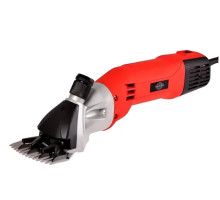
Sheep must be sheared before feeding and watering, since well-fed sheep do not tolerate shearing well and there are often cases of intestinal volvulus, etc., ending in the death of the animals. Their wool must be dry during shearing. Special spring scissors or a sheep shearing machine (shearing machine) are used for shearing. Three legs of the sheep are first tied together, folding them crosswise. The fourth is left free for processing.
Sheep are best sheared on a plank flooring. First, the head is processed, then the neck, chest, then the groin of the free leg and belly. Next, the wool is sheared from the side, back and tail. Then the animal is turned over, the legs are re-tied and the other side, shoulder blade, free part of the belly and groin are sheared. The wool should be sheared as close to the skin as possible, but without damaging it. Great care must be taken when processing the belly, making sure not to damage the nipples of ewes and ewes, and the scrotum of rams. You cannot go over the same place twice, as chaff will form, which reduces the quality of the fleece.
Sheep shearing equipment is an integral part of the technological process of producing sheep products, regardless of the direction of productivity (meat / wool) and the breed characteristics of the sheep. Sheep whose wool is not sheared feel bad, especially in the summer. Over the course of a year, the wool becomes dirty and turns into a breeding ground for parasites. Sheep become inactive, consume less feed, and herd productivity decreases.
Sheep shearing machines are the key to the development of sheep farming as a separate branch of animal husbandry. Purchasing high-quality and reliable products will allow you to use the funds spent on sheep shearing equipment as efficiently as possible.
There are two ways to shear sheep - electromechanical (machine) and manual (scissors). Electromechanical shearing has a number of advantages over manual shearing. Firstly, labor is made easier and its productivity increases; secondly, the quality of the wool improves, since the fleece is sheared more evenly and closer to the skin, due to which the wool is longer. This is especially important for fine wool, as the length increases, its class increases and, accordingly, the payment increases.
Our company, which has been selling sheep shearing equipment for many years, is ready to provide you and your enterprise with a quality tool that will facilitate the care of keeping and shearing sheep.
The goods we offer have international quality and safety certificates CE, GS, EMC, the manufacturer is certified according to ISO9001 as a manufacturer of professional equipment for shearing animals. In addition, our sheep shearing machines have been successfully tested and certified in accordance with the requirements of national legislation on metrology and standardization.
When purchasing sheep shearing machines from us, you not only receive a quality product, but also receive a 1-year warranty and post-warranty service for the equipment.

0 reviews / Write a review
Last Articles

22/07/2026
361
Comparison of effective pigeon repellants: which one to choose for your site?
Effective pigeon repellers: overview and selection for your site Pigeons, despite their peaceful nature, can be a real problem for farmers, homeowners, and city dwellers. They not only pollute the ter..
→

22/07/2026
331
How to install an electric fence with your own hands: step-by-step instructions
Self-installation of an electric fence: step-by-step instructions Organizing effective livestock management or protecting an area from wild animals often requires reliable solutions. One of the most p..
→

22/07/2026
338
How to get rid of pigeons: mistakes and effective methods of scaring them away
Effective protection against pigeons: common mistakes and ways to avoid them Pigeons, although they are common inhabitants of urban landscapes, can cause significant damage to private households, indu..
→

22/07/2026
302
How to Choose a Bird Scarer: A Complete Guide for Gardening and Farming
Introduction: Why do we need effective bird repellers? The damage caused by birds can be significant: from destroying crops in fields and gardens to polluting warehouses and livestock farms. Small bir..
→

21/07/2026
354
Plastic drinking troughs for sheep and goats: selection and care
Why do sheep and goats need constant access to water? Sheep and goats must have constant access to fresh, clean drinking water. Restricting water can reduce feed intake, productivity, and the general ..
→

21/07/2026
336
Electronic propane bird repellents: how they work, setup and maintenance
Effective crop protection: electronic propane bird repellers Preservation of crops and protection of livestock complexes from bird invasions is one of the key tasks for any farmer. Among the various m..
→

21/07/2026
318
How to choose an electric fence to protect against wild animals: selection criteria and what’s included
Why do you need an electric shepherd against wild animals? An electric fence for wild animals is used as a perimeter fence to deter animals from entering a pasture, enclosure, garden, field, or other ..
→

21/07/2026
335
DIY Electric Fence Installation: How to Properly Install Nail-On and Screw-In Electric Fence Insulators
The Role of Insulators in an Electric Fence SystemAn electric fence is an effective and economical solution for grazing livestock and protecting an area from wild animals. However, the reliability of ..
→

21/07/2026
349
Care and maintenance rules for professional sheep shearing machines: blade replacement and preventive maintenance
Introduction: Why proper care of shearing equipment is criticalEffective farm management and livestock care require the use of reliable equipment. Modern sheep shearing machines are designed to withst..
→

21/07/2026
374
Milking Machines for Goats and Sheep: Differences from Cow Systems and Selection Rules
Why can't goats and sheep be milked with a cow milking machine?Machine milking of small ruminants has fundamental differences from the handling of cattle. The main reason lies in the animals' physiolo..
→

21/07/2026
330
Electric Butter Churns: Assessing Payback and Productivity
Electric Butter Churns: How to Assess Whether a Purchase Is WorthwhileProducing your own butter is a logical step for any farm with access to whole cow's or goat's milk. Selling raw milk often brings ..
→

21/07/2026
309
How to Choose and Buy an Electric Fence for Cows: A Complete Guide to Selecting a Kit
Why Cattle Need a Specialised Electric FenceOrganising grazing for cattle requires reliable control of the territory. Traditional wooden or metal fences require significant financial expenditure and i..
→

21/07/2026
334
How to Choose and Which Electric Cattle Prod to Buy: Comparison of Models and Selection Criteria
Introduction: the role of electric livestock prods in modern animal husbandryManaging a large herd on livestock farms requires considerable effort and patience from staff, as well as strict compliance..
→
ArticlesAll news

A cow that drinks ice water in winter is not getting enough feed. The energy to warm up what it drin..
Autumn sowing of winter wheat, barley and rapeseed requires farmers to take a balanced approach to s..

Features of technical maintenance of agricultural machinery: spare parts for MTZ, UMZ tractors, disk..

Yellowing of the edges of the leaves, slowed growth or uneven ripening of the ear often indicate not..

A free plot near a garden or field does not mean that it is enough to simply place a few hives there..

During tillage, agricultural machinery operates under significant load, and in hot weather, the requ..

Industrial emissions are formed during fuel combustion, drying, painting, raw material processing, o..
Kraft paper bags are confidently replacing polypropylene and polyethylene packaging in the agricultu..
Product catalog