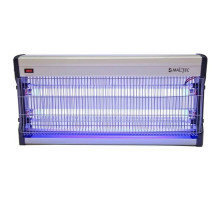
Why Choosing the Right Insect Control Device is Important for Farms and Homes
An invasion of flying pests — flies, mosquitoes, midges, wasps and moths — can not only ruin your leisure time but also cause serious damage to livestock farming, reduce cow milk yields, disrupt hygienic processes in production or violate sanitary standards in catering establishments. Modern ultraviolet insect killers are an eco-friendly, safe and highly effective tool for controlling these pests without using hazardous chemicals or insecticides. They attract insects with a specific light spectrum and then ruthlessly neutralise them.
However, the efficiency of such equipment directly depends on selecting the right model for specific operating conditions. There is no universal device that works equally well in a cosy bedroom, a huge open cowshed or a finished goods warehouse. To make a rational purchase, it is necessary to understand the technical specifications of the devices, their operating principles in detail, and consider the specifics of the facility where installation is planned.
Operating Principle and Main Types of Devices
The operation of these devices is based on the phenomenon of positive phototaxis — the natural tendency of most flying insects to fly towards a light source. Long-wave ultraviolet radiation (UV-A range) with a wavelength of around 365 nanometres is the most attractive to them. This light is completely safe for human and domestic animal vision, but for insects, it serves as a powerful beacon.
Depending on how the attracted pests are neutralised, the devices are divided into several main categories:
- Electric killers with a high-voltage grid. A metal grid is installed around the light source, supplied with a high-voltage current (from 1500 to 4000 V) with minimal amperage. An insect, trying to fly to the lamp, touches the grid and instantly dies from the electrical discharge, after which it falls into a special pull-out tray. This is a classic ultraviolet insect killer, characterised by durability and low maintenance.
- Glue traps (with a sticky screen). Instead of a high-voltage grid, a special adhesive board is placed behind the lamp. The insect sticks to it and dies. Such devices operate completely silently, without the characteristic crackling of discharges, and prevent insect body fragments from scattering. They are mandatory for use in food preparation areas according to HACCP standards.
- Suction traps with a fan. Insects fly towards the lamp and are drawn inside the device by an airflow created by a fan, where they eventually die of dehydration in a closed container.
- Specialised traps with attractants. Combined systems are used to control mosquitoes, which do not respond well to ordinary light. For example, the professional Mosquito Trap AMT 100 mosquito trap mimics human vital activity by emitting carbon dioxide (CO2), heat, moisture and a special bait (octenol). For the connection and stable operation of such gas attraction systems, a reliable 4 mm silicone hose or 6 mm silicone hose for CO2 traps is used, which ensures precise gas delivery to the emission zone.
Key Selection Criteria for an Ultraviolet Killer
To ensure the chosen device operates with maximum efficiency, you should pay attention to the following technical and design parameters when purchasing:
1. Power and Type of Light Source
The main element of the device is the lamp for insect killers. The operating radius of the device depends on its power. Models with various total lamp wattages are available on the market:
- Low power (up to 10-15 W). Suitable for small enclosed rooms, offices or bedrooms with an area of up to 20-30 sq. m. For example, a replacement UV lamp for insect killers 10 W provides a moderate luminous flux sufficient for local protection.
- Medium power (20-40 W). The optimal choice for living rooms, small shops, covered terraces and utility rooms with an area of up to 80-100 sq. m.
- High power (from 40 W and more). Designed for large industrial facilities, warehouses, livestock farms, cowsheds and open areas. The higher the light power, the further the UV rays travel, and the more insects the device can attract from distant corners of the room.
2. Effective Coverage Area
Manufacturers always state the maximum coverage area of the device. However, it is worth bearing in mind that these figures are calculated for operation in complete darkness and with no obstacles in the path of light propagation. If there are partitions, columns or other bright lighting in the room, the effective coverage area of the device should be halved. For open outdoor areas, it is better to choose the most powerful devices or combine several traps along the perimeter of the territory.
3. Ingress Protection Rating (IP Class)
Operating conditions determine the requirements for dust and moisture protection of the device housing:
- For standard living rooms and dry offices, a basic IP20 protection class is sufficient.
- For outdoor use (under a canopy), on open verandas or in damp and dusty areas of farms, cowsheds or pig farms, it is necessary to purchase models with a protection class of at least IP44 (protection against water splashes and fine dust). This ensures fire safety and a long service life of the device in aggressive environments.
4. Housing Material and Operational Safety
A high-quality killer should have a durable housing made of fire-resistant ABS plastic or anodised aluminium, resistant to corrosion and mechanical damage. Pay special attention to the protective grille: its mesh should be small enough so that a child or pet cannot accidentally touch the internal high-voltage grid with their fingers or nose.
When an Ultraviolet Insect Killer Will Not Help: Limitations and Alternatives
Despite their high efficiency, ultraviolet devices are not a panacea for absolutely all situations. There are scenarios where their use will be of low efficiency:
- Bright daylight. Sunlight contains a huge amount of natural ultraviolet light, which completely eclipses the light of even the most powerful artificial lamp. Therefore, during the day outdoors, the efficiency of the devices drops sharply.
- Controlling non-flying pests. The devices are designed exclusively for flying insects. They are useless against crawling insects, ticks or rodents.
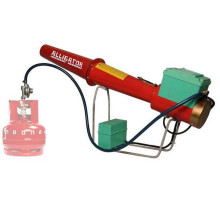
- Bird control. If wild birds are causing trouble on your farm, garden or warehouse, ultraviolet light will not help here. In such cases, completely different technologies are needed — for example, a bioacoustic sound bird repeller Sapsan 3 or a mechanical propane cannon for repelling birds over large areas.
For effective mosquito control in open areas, the best alternative is specialised traps that mimic breathing and body heat, as mosquitoes are more attracted to carbon dioxide and skin odour than just a light source.
Common Mistakes in Purchasing and Installing Devices
Even the most expensive and powerful device can show zero results if mistakes are made during the selection or installation phase:
- Incorrect installation location. It is a mistake to mount the device directly above a dining table or a bed. The device attracts insects to itself, so by hanging it overhead, you will only increase the number of unwanted guests near you. The correct solution is to place the device along the path of insect entry into the room (near doors, windows) or away from areas where people gather.
- Competition with other light sources. If you install the killer near a powerful chandelier or wall lamp, insects simply will not notice its weaker ultraviolet radiation.
- Neglecting regular cleaning. A high-voltage grid clogged with insect bodies loses its conductivity and stops killing new pests. In addition, a dirty tray becomes a source of unpleasant odour and bacteria.
- Using ordinary blue lamps instead of special UV ones. Many buyers believe that any blue light attracts insects. This is a mistake. Ordinary blue LEDs or incandescent lamps do not emit light in the required spectrum (365 nm) and are completely useless for phototaxis.
Maintenance and Replacement of Components
To maintain stable performance of the device, simple maintenance rules must be followed:
- Regular cleaning. Clean the pull-out tray from insect remains weekly and use a special brush (usually included) to clean carbon deposits from the high-voltage grid (make sure to unplug the device first!).
- Timely lamp replacement. Any ultraviolet lamp for insect killers has a limited lifespan for effective phosphor emission (typically 5,000 to 8,000 operating hours). Even if the lamp continues to glow with a pleasant blue light, after a year of active use, it loses up to 50% of its intensity in the UV range and stops attracting insects. It is recommended to replace the lamps at the beginning of each warm season (spring).
- Checking connection tightness. If you use gas traps with CO2 cylinders, regularly check the condition of the supply tubes. A worn or cracked hose can lead to gas leaks and reduced attraction efficiency.
Frequently Asked Questions (FAQ)
Are ultraviolet killers safe for human and domestic animal vision?
Yes, the devices use a soft ultraviolet spectrum of the UV-A type, which is completely safe for the eyes and skin of humans, as well as for cattle, horses, pigs, goats, sheep and pets in daily use.
Can the device be left on all night?
Not only can it be, but it should be. Ultraviolet killers show their maximum efficiency in the evening and night hours, when natural sunlight is absent and the device becomes the only bright beacon for flying insects in its coverage area.
How do I know when it is time to replace the lamp in the killer?
If you notice that insects have become significantly less interested in the device, even though their number around has not decreased, or if the ends of the glass bulb of the lamp have visibly darkened — these are clear signs of phosphor burn-out. The lamp must be replaced with a new one of the same power.
What is better for an open gazebo: an electric killer or a glue trap?
For open spaces (gazebos, terraces, yards), electric killers with a high-voltage grid and a high level of moisture protection are better suited. Outdoors, glue traps quickly become covered with dust, leaves and poplar fluff, causing the adhesive surface to instantly lose its properties and requiring constant replacement of expensive sticky sheets.

0 reviews / Write a review