How to choose an electric shepherd for different animals: cows, bulls, sheep, pigs, horses

How to choose an electric shepherd for different animals: cows, bulls, sheep, pigs, horses

Choosing an electric shepherd is not just a technical issue and not a banal purchase of equipment. In a real farm, it is a decision that directly affects animal control, crop preservation, time and nerve expenditure, and sometimes even human safety. That is why the approach of “I will take something in the middle and see how it works” in most cases ends in problems. The electric shepherd either works correctly and stably, or creates constant minor and major difficulties.

In practice, the farmer is faced not with ideal conditions, but with real ones: uneven terrain, dry or sandy soil, rain, snow, grass growing under the wire, different animal behavior, seasonal changes. And it is in these conditions that the system shows its true level. The same electric shepherd may seem effective in a short, clean area, but be weak in a large field or when the weather changes.

Therefore, the right choice is always a combination of factors. You need to take into account the type of animals, the length of the fence, the number of lines, the type of conductor, the quality of the insulators, the grounding, and even how the animals behave. It is these nuances that determine the result, and not just the numbers in the characteristics.

How an electric shepherd works in practice, not in theory

In theory, everything looks simple: the generator gives an impulse, the wire conducts it to the fence, the animal touches it and receives a signal. But in real conditions, there is a whole chain of factors between the generator and the animal that either help or hinder the system from working.

The impulse must pass through the fur or skin, then through the animal's body, then through the ground to return to grounding. If there is a problem somewhere in this chain, the effect is significantly reduced. That is why sometimes the farmer sees that “there is current”, but the animals still approach the fence and are not afraid of it.

Another important point: the electric shepherd works through reflex, not through force. It should not physically restrain the animal, like a fence. It should teach it not to approach the boundary. But this reflex is formed only when the first contact is sufficiently tangible. If the first experience is weak, the animal is not afraid and begins to test the fence.

That is why a weak electric shepherd is not just a “less effective option”. It is a system that can form incorrect animal behavior, and then even a stronger fence will work worse, because the animals are no longer afraid.

Volts vs. Joules: the real logic of choice

Most beginners look at volts because it is the most understandable parameter. But in real life, volts are only part of the picture. They show how well the pulse can penetrate contact through fur or dirt.

But if the energy is weak, even high volts will not have the desired effect. The animal will feel a slight shock, but will not form fear. This is where joules come into play - the real energy of the pulse.

A practical example: two electric shepherds with the same voltage. One has 2 J, the other - 6 J. In clean conditions, both can work. But as soon as grass, a long line or dry soil appears, the weak option sharply loses its effectiveness, while the stronger one continues to work stably.

That is why in a professional approach, joules are always used. Volts are important, but they do not determine the outcome by themselves.

Cows and bulls: why you can’t put one system on everyone

Cows are often perceived as “easy” animals for an electric herder. And that’s partly true. They learn quickly and respond well to the fence. But only if the system provides enough momentum from the start.

Bulls are a completely different story. They are stronger, heavier and often more persistent. While a cow may back off after contact, a bull may deliberately test the fence and even push it.

A typical mistake: a farmer sets the system to 2–3 J for the entire herd. For cows, it still works, but for bulls, it doesn’t. As a result, the bulls become the weak point of the entire fence.

In real conditions, 2–4 J is often enough for cows, but for bulls it is better to focus on 4–8 J or more. And this is not “reinsurance”, but a necessity. Any loss of current along the length or through vegetation immediately reduces efficiency, and the weak system ceases to perform its function.

What will happen if you do it wrong? At first, nothing. But after a few days or weeks, the bulls will start to ignore the fence. And then you will have to not only change the generator, but also restore the entire system.

Sheep: the most difficult scenario for an electric shepherd

Sheep are a classic example where most errors manifest themselves as quickly as possible. Their wool works as an insulator. This means that the weak impulse simply does not reach the body.

As a result, the farmer sees the voltage, sees that the system is "working", but the sheep go through the fence. This is one of the most common scenarios.

For sheep, more energy is needed. Usually a minimum of 5-6 J, and in many cases 6-10 J. And this is without taking into account the length of thehogs.

The number of lines is also important. One line almost never works well for sheep. You need several levels to ensure contact.

What happens if the system is weak? The sheep will quickly realize that the fence is not scary and will start to leave. After that, even replacing the generator does not always immediately correct the situation, because the behavior has already been formed.

Pigs: the whole problem is in the details

Pigs are often underestimated. They seem to be simpler than sheep or bulls. But their behavior creates its own problems. They dig the ground, look for weak spots, work with the lower part of the fence.

Not only the power is important here, but also the height of the wire. If the wire is high, the pig will climb through. If it is low, the current is lost through the grass.

For standard pigs, 1–3 J is suitable, but for large or shaggy pigs, 3–5 J. And again, these are basic figures, without taking into account the conditions.

The real problem arises when the farmer thinks that power is everything. But if the geometry of the fence is incorrect, even a good generator will not help.

Dry ground vs. wet ground: a key factor in efficiency

The electric shepherd works through the ground. If the ground does not conduct current, the system does not work properly.

In wet soil, the impulse passes well. In dry soil, it is much worse. That is why problems often arise in the summer, even if the system worked normally before.

Practical scenario: everything is fine in the spring. In the summer, the ground dries out, and the animals begin to ignore the fence. The reason is not in the generator, but in the conditions.

The solution is a good power reserve and proper grounding.

Grounding: the most common cause of problems

Without proper grounding, the electric shepherd will not work. This is no exaggeration. Most problems in systems are related to it.

Grounding must be deep, stable, and preferably in moist soil. Usually 1–3 pins 1–1.5 m deep are used.

If the grounding is weak, the current does not return, and the impulse becomes weak. The animals feel it immediately.

Often the farmer buys a new generator, but the problem remains. Because it was not in it.

Winter vs. summer: different conditions — different efficiency

In winter, another problem is added — snow. It insulates and worsens the contact with the ground.

As a result, the system that worked in the summer becomes weaker in the winter.

The solution is more power, better grounding and the correct configuration of the lines.

Summary: how to really choose an electric shepherd

The correct choice of an electric shepherd is not about the number, but about the system.

You need to take into account the animals, length, soil, season, behavior and installation.

The main rules are simple:

  • focus on joules;
  • take a power reserve;
  • make high-quality grounding;
  • do not save on components;
  • take into account real conditions.

And most importantly, a weak electric shepherd is not just works worse. It shapes the wrong behavior of animals. And this is a problem that is difficult to fix even after upgrading the system.

Prepared by experts
Expert recommendations
About company
Practical information prepared with real product experience and customer needs in mind.

0 reviews / Write a review
Related Products
BEST SELLER
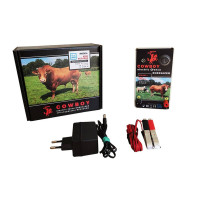
Electric Fencer COWBOY 1100 ECO LITE (Hungary)
Country of origin: Hungary Manufacturer: Cowboy Impact force, J: 1.1 Voltage, V: 220/12
2 reviews
2,200 грн.
BEST SELLER
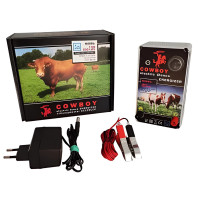
Electric shepherd COWBOY 4200 ECO MAX for cows
Country of origin: Hungary Manufacturer: Cowboy Impact force, J: 4.2 Voltage, V: 220/12
2,600 грн.
BEST SELLER
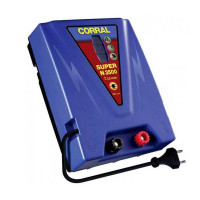
Electric Fence Corral N3500
Country of origin: Germany Manufacturer: Kerb Impact force, J: 3.5 Voltage, V: 220
7,140 грн.
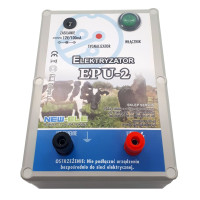
Pulse generator, electric shepherd EPU-2, 12V / 230V
Country of origin: Poland Manufacturer: EPU Impact force, J: 2 Voltage, V: 220/12
2 reviews
2,300 грн.
BEST SELLER
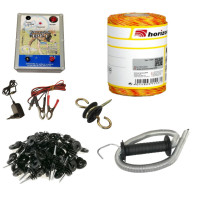
Electric shepherd for cows for 1 ha, set
Country of origin: Poland Manufacturer: EPU Impact force, J: 2 Voltage, V: 220/12
3,600 грн.
BEST SELLER
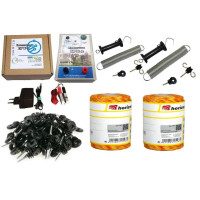
Electric shepherd set for 1 ha in two lines
Country of origin: Poland Manufacturer: EPU Impact force, J: 2.0 Voltage, V: 220/12
4,900 грн.
DISCOUNT; - 701 грн.
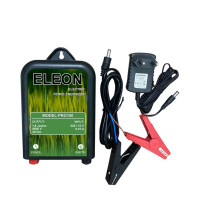
Electric shepherd ELEON PRO100 1.8 J, 12/220, Poland
Country of origin: Poland Impact force, J: 1.8 Voltage, V: 220/12 Perimeter, km: 20
2,799 грн.3,500 грн.
DISCOUNT; - 991 грн.
BEST SELLER
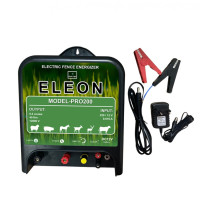
Electric shepherd ELEON PRO200 5.5 J 12/220/solar, Poland
Country of origin: Poland Impact force, J: 5.5 Voltage, V: 220/12/solar Perimeter, km: 40
4,499 грн.5,490 грн.
A set of electric shepherds for 1 ha ELEON PRO100-1G
Country of origin: Poland Manufacturer: Eleon Impact force, J: 1.8 Voltage, V: 220/12
1 review
4,300 грн.
Write a review
Note: HTML is not translated!
    Bad            Good
Last Articles
Comparison of effective pigeon repellants: which one to choose for your site?
22/07/2026 356
Comparison of effective pigeon repellants: which one to choose for your site?
Effective pigeon repellers: overview and selection for your site Pigeons, despite their peaceful nature, can be a real problem for farmers, homeowners, and city dwellers. They not only pollute the ter.. →
How to install an electric fence with your own hands: step-by-step instructions
22/07/2026 324
How to install an electric fence with your own hands: step-by-step instructions
Self-installation of an electric fence: step-by-step instructions Organizing effective livestock management or protecting an area from wild animals often requires reliable solutions. One of the most p.. →
How to get rid of pigeons: mistakes and effective methods of scaring them away
22/07/2026 333
How to get rid of pigeons: mistakes and effective methods of scaring them away
Effective protection against pigeons: common mistakes and ways to avoid them Pigeons, although they are common inhabitants of urban landscapes, can cause significant damage to private households, indu.. →
How to Choose a Bird Scarer: A Complete Guide for Gardening and Farming
22/07/2026 296
How to Choose a Bird Scarer: A Complete Guide for Gardening and Farming
Introduction: Why do we need effective bird repellers? The damage caused by birds can be significant: from destroying crops in fields and gardens to polluting warehouses and livestock farms. Small bir.. →
Plastic drinking troughs for sheep and goats: selection and care
21/07/2026 347
Plastic drinking troughs for sheep and goats: selection and care
Why do sheep and goats need constant access to water? Sheep and goats must have constant access to fresh, clean drinking water. Restricting water can reduce feed intake, productivity, and the general .. →
Electronic propane bird repellents: how they work, setup and maintenance
21/07/2026 331
Electronic propane bird repellents: how they work, setup and maintenance
Effective crop protection: electronic propane bird repellers Preservation of crops and protection of livestock complexes from bird invasions is one of the key tasks for any farmer. Among the various m.. →
How to choose an electric fence to protect against wild animals: selection criteria and what’s included
21/07/2026 313
How to choose an electric fence to protect against wild animals: selection criteria and what’s included
Why do you need an electric shepherd against wild animals? An electric fence for wild animals is used as a perimeter fence to deter animals from entering a pasture, enclosure, garden, field, or other .. →
DIY Electric Fence Installation: How to Properly Install Nail-On and Screw-In Electric Fence Insulators
21/07/2026 327
DIY Electric Fence Installation: How to Properly Install Nail-On and Screw-In Electric Fence Insulators
The Role of Insulators in an Electric Fence SystemAn electric fence is an effective and economical solution for grazing livestock and protecting an area from wild animals. However, the reliability of .. →
Care and maintenance rules for professional sheep shearing machines: blade replacement and preventive maintenance
21/07/2026 342
Care and maintenance rules for professional sheep shearing machines: blade replacement and preventive maintenance
Introduction: Why proper care of shearing equipment is criticalEffective farm management and livestock care require the use of reliable equipment. Modern sheep shearing machines are designed to withst.. →
Milking Machines for Goats and Sheep: Differences from Cow Systems and Selection Rules
21/07/2026 366
Milking Machines for Goats and Sheep: Differences from Cow Systems and Selection Rules
Why can't goats and sheep be milked with a cow milking machine?Machine milking of small ruminants has fundamental differences from the handling of cattle. The main reason lies in the animals' physiolo.. →
Electric Butter Churns: Assessing Payback and Productivity
21/07/2026 319
Electric Butter Churns: Assessing Payback and Productivity
Electric Butter Churns: How to Assess Whether a Purchase Is WorthwhileProducing your own butter is a logical step for any farm with access to whole cow's or goat's milk. Selling raw milk often brings .. →
How to Choose and Buy an Electric Fence for Cows: A Complete Guide to Selecting a Kit
21/07/2026 301
How to Choose and Buy an Electric Fence for Cows: A Complete Guide to Selecting a Kit
Why Cattle Need a Specialised Electric FenceOrganising grazing for cattle requires reliable control of the territory. Traditional wooden or metal fences require significant financial expenditure and i.. →
How to Choose and Which Electric Cattle Prod to Buy: Comparison of Models and Selection Criteria
21/07/2026 330
How to Choose and Which Electric Cattle Prod to Buy: Comparison of Models and Selection Criteria
Introduction: the role of electric livestock prods in modern animal husbandryManaging a large herd on livestock farms requires considerable effort and patience from staff, as well as strict compliance.. →
ArticlesAll news
Watering livestock in winter: water standards, heating and containers on the farm
A cow that drinks ice water in winter is not getting enough feed. The energy to warm up what it drin..
The best fertilizers for winter crops: top solutions for autumn application
Autumn sowing of winter wheat, barley and rapeseed requires farmers to take a balanced approach to s..
Spare parts for MTZ and YuMZ tractors, features of technical maintenance of agricultural machinery
Features of technical maintenance of agricultural machinery: spare parts for MTZ, UMZ tractors, disk..
Choose effective fertilizers for your farm
Yellowing of the edges of the leaves, slowed growth or uneven ripening of the ear often indicate not..
Apiary as an additional direction of farming: what to consider before installing beehives
A free plot near a garden or field does not mean that it is enough to simply place a few hives there..
Increased load in the summer heat: when it becomes necessary to buy a radiator for a walk-behind tractor
During tillage, agricultural machinery operates under significant load, and in hot weather, the requ..
Industrial emissions control: why does an enterprise need regular laboratory measurements?
Industrial emissions are formed during fuel combustion, drying, painting, raw material processing, o..
Armor that breathes: why agribusiness is massively switching to kraft bags for seeds and fertilizers
Kraft paper bags are confidently replacing polypropylene and polyethylene packaging in the agricultu..
Product catalog
Dark theme