Electric shepherd for cows and horses: how to choose and install the right one
Electroshepherd is a modern electric fencing system that allows you to effectively control the grazing of cattle and horses without constant physical supervision. For farms, it is not only a way to keep animals within a defined territory, but also a tool to optimize costs for fencing, personnel and pasture maintenance.
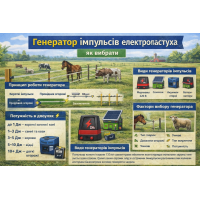
The principle of operation is based on short pulses of high voltage with low current. When the animal touches the conductor, it receives a safe but tangible signal, which forms a conditioned reflex - not to approach the fence. With correctly selected parameters, the system does not harm health, but ensures stable herd discipline.
Features of choosing an electric shepherd for cows and horses
Cows and horses share a commonality of size and strength, but their behavior differs. Cows are generally calmer, while horses are more sensitive and can panic if not properly mounted or given too little impulse. Therefore, it is important to consider both the physical and behavioral characteristics of the animals when choosing equipment.
First of all, the grazing area, the length of the perimeter and the presence of vegetation are assessed. Tall grass, bushes or weeds touching the conductor create current leakage and reduce the efficiency of the system.
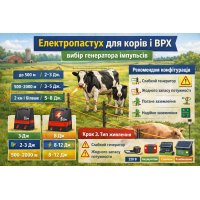
- • Generator power (impulse energy in joules) — for cattle it is usually 2–5 J, for horses 2–3 J is sufficient.
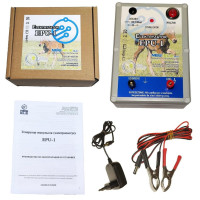
- • Power type — 220 V, 12 V from battery or solar panel for remote pastures.
- • Fence length — each model has a mileage limit.
- • Presence of voltage indicator and short circuit protection.
For large farms, it is advisable to immediately build a capacity reserve. Practice shows that a system that operates at the limit of its capabilities breaks down faster and requires more frequent service.
Fence equipment and design
The effectiveness of an electric shepherd depends not only on the generator, but also on the correctly selected components. The height of the lines, the number of conductors and the quality of the insulators directly affect the behavior of the animals and the durability of the system.
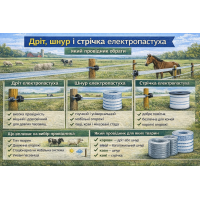
For cows, two to three guide lines are usually sufficient, while for horses, three to four are recommended to prevent them from jumping over or going under the fence.
- • Posts — metal, plastic or fiberglass, with an installation step of 6–10 m.
- • Conductor — galvanized wire, cord, or ribbon (ribbon is better for horses, it is more noticeable).
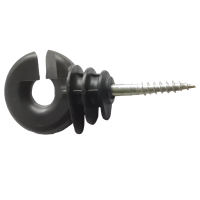
- • Insulators — resistant to ultraviolet light and mechanical stress.
- • Grounding — minimum 1–3 metal pins 1–1.5 m deep.
Good grounding is a critical element. Without it, even a powerful generator will not provide the necessary effect. In dry soils, it is recommended to increase the number of grounding pins or moisten the area around them.
Installation and first start-up of the system
Installation begins with marking the perimeter and installing corner posts. They are the ones that bear the main mechanical load, so they must be securely fastened. After that, intermediate supports are installed and the conductor is tensioned.
It is important to avoid contact of the conductor with vegetation, metal objects and wet surfaces. After installation is complete, the system is connected to the power source and checked with a voltage tester.
- • Check the quality of all connections.
- • Measure the voltage at the furthest point of the fence.
- • Make sure there are no current leaks.
- • Conduct the first control contact under supervision.
The optimal operating voltage for cows and horses is usually 4–7 kV. If the readings are lower, you need to check for grounding or contact with vegetation.
Typical operating errors
Even high-quality equipment does not guarantee results without proper maintenance. Regular perimeter inspection and voltage monitoring can avoid most problems.
- • Insufficient grounding.
- • Using a conductor that is too thin or of poor quality.
- • Overgrowth of the line with grass and weeds.
- • Connecting a generator without lightning protection.
Timely maintenance extends the life of the system for years and reduces the risk of animals escaping.
Where to buy a reliable electric shepherd
When choosing equipment, you should pay attention not only to the price, but also to the supplier's reputation, warranty conditions and availability of components. You can view the full range of solutions for cattle and horses at the link:
Electric shepherd for cows and horses - selection and equipment
A competently selected and correctly installed electric shepherd is an investment in animal safety, grazing efficiency and farm stability. If technical recommendations are followed, the system will work for years without complex service and significant costs.