How to effectively repel pigeons and sparrows: comprehensive solutions for long-term protection
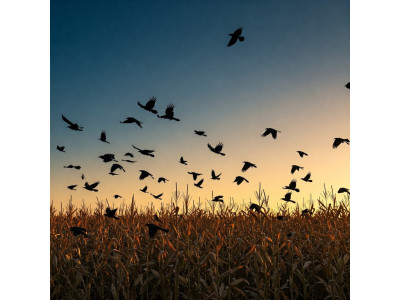
Pigeons and sparrows are typical synanthropic birds that easily adapt to life next to humans. They actively inhabit the roofs of buildings, warehouses, elevators, livestock complexes, balconies and technical structures. At first glance, their presence seems harmless, but in reality it can create serious operational, sanitary and financial problems.
The modern approach to bird control is based not on extermination, but on systematic and humane deterrence. A comprehensive strategy allows you to minimize damage, prevent re-introduction, and preserve the environment.
Why pigeons and sparrows are a problem
One adult pigeon can leave up to 10–12 kg of droppings per year. On the scale of a large roof or warehouse, this amounts to hundreds of kilograms of aggressive organic matter. The droppings have an acidic reaction, accelerate metal corrosion, destroy coatings, and contaminate facades.
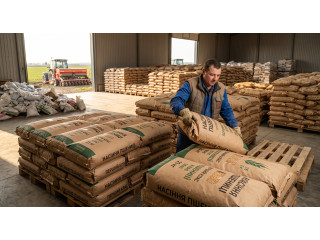
In grain storage, losses can reach 3–5% of the storage volume due to eating and contamination of products. In addition, birds carry pathogens of infections, including ornithosis, salmonellosis and campylobacteriosis, which creates additional risks for food enterprises and farms.
The main problems caused by birds:
- corrosion of metal structures and damage to facades;
- clogging of ventilation systems;
- damage to insulation and cables;
- grain and feed losses;
- sanitary risks for personnel.
The principle of complex deterrence
Effective protection is based on three key areas:
- elimination of attractiveness factors (food, water, nesting sites);
- creating physical barriers;
- use of behavioral deterrents.
Combining methods increases efficiency several times compared to using a single solution. Choose a suitable method of scaring off a fly in the ointment here: https://fermateh.com.ua/en/bird-repellers_en/
Mechanical protection methods
Physical barriers are the most reliable long-term solution. They do not harm birds, but they make the site unsuitable for landing or nesting.
Anti-spike spikes are installed on cornices, parapets, air conditioners and beams. They are made of stainless steel or UV-resistant plastic and last 5–10 years.
Advantages:
- durability and resistance to weather conditions;
- no need for maintenance;
- humane principle of action;
- suitable for urban and industrial facilities.
Protective nets are used to cover balconies, hangars, warehouses, farms. A high-quality net withstands ultraviolet light and temperature changes, ensuring complete blocking of access.
Ultrasound and bioacoustic systems
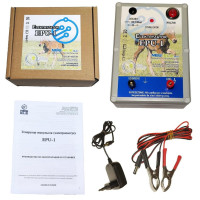
Ultrasonic devices create variable frequencies that cause discomfort to birds. They are effective in enclosed spaces — warehouses, hangars, under sheds.
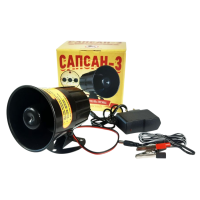
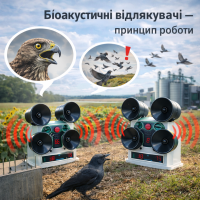
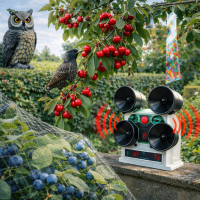
Bioacoustic systems reproduce the sounds of predators or alarm signals. They are used in large open areas - grain elevators, agricultural enterprises, solar power plants.
Their advantages:
- possibility of programming according to schedule;
- efficiency over large areas;
- safety for people;
- no use of chemicals.
Visual and light deterrents
Birds are sensitive to movement and unstable light. Holographic ribbons, rotating elements and laser systems create a changing environment that causes alertness.
Most often used:
- reflective tapes;
- models of birds of prey;
- laser repellers for large areas;
- lighting devices with variable flash frequency.
It is worth considering that as an independent method, these solutions usually have a temporary effect.
Organizational events
Without prevention, even the most effective devices may not give the desired result. It is necessary to eliminate sources of attraction for birds.
- ensure hermetic storage of grain and feed;
- regularly clean the area from food debris;
- cover ventilation holes with nets;
- seal cracks and holes;
- Avoid feeding birds near the facility.
Economic efficiency
Investments in a deterrent system pay for themselves within 1–2 seasons by reducing cleaning, repair and product losses. For agricultural enterprises, this means stable grain quality, and for commercial facilities, preserving the aesthetics and functionality of buildings.
Conclusion
Repelling pigeons and sparrows is a strategic task that requires a comprehensive approach. A combination of mechanical barriers, acoustic systems, and preventive measures allows for a stable result without harming the birds.
A properly organized protection system ensures long-term control of the situation, reduces operating costs, and increases the sanitary safety of the facility.