Bird repellers: effective protection against crows, gulls, pigeons and other birds
Birds such as crows, gulls, pigeons, jays, bees and starlings can cause significant damage to agriculture, warehouses, airfields and even urban facilities. To protect against these feathered pests, bird repellers are used - modern devices that help to effectively and safely solve the problem. In this article, we will analyze what repellers are, their differences, advantages, and also talk about popular models such as Sapsan-3 , Korshun-8 , propane guns KBS M1 and KBS E1 , as well as visual repellers. We will take into account popular Google queries such as "buy bird repeller", "ultrasonic bird repeller", "propane bird repeller" and others to make the article as useful as possible.
What are bird repellers and why are they needed?
Bird repellers are devices designed to protect areas from the unwanted presence of birds. They are used in various areas: from agriculture (protection of fields and gardens) to urban infrastructure (airports, warehouses, residential buildings). Birds such as crows, gulls, pigeons, jays, bee-eaters and starlings can cause serious damage: destroy crops, pollute areas, carry diseases or threaten aviation.
There are several types of repellers: ultrasonic, bioacoustic, visual, propane guns, and laser devices. Each of them has its own characteristics and is suitable for certain tasks. Let's consider them in more detail.
Types of bird repellers: differences and features
1. Ultrasonic repellers
Ultrasonic repellers emit high-frequency sound waves that are inaudible to humans but cause discomfort to birds. They are effective against small birds such as sparrows, pigeons, starlings, and bee-eaters.
Popular Google searches: "ultrasonic bird repeller", "bird repeller for garden", "ultrasonic pigeon repeller".
Advantages:
- Silence for humans.
- Compactness and ease of installation.
- Suitable for domestic use (e.g. on balconies or gardens).
Disadvantages:
- Limited range (usually up to 85 m2).
- May be less effective against large birds such as crows or gulls, which quickly become accustomed to ultrasound.
2. Bioacoustic repellers
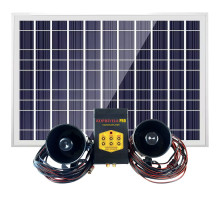
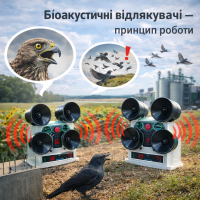
Bioacoustic devices, such as Korshun-8 and Sapsan-3 , imitate the sounds of birds of prey (such as hawks or falcons) or the alarm cries of birds, causing them to panic. They are effective against crows, gulls, jays, starlings, and other species.
Popular Google searches: "bioacoustic bird repeller", "crow repeller", "seagull repeller".
Advantages:
- Highly effective even against large birds.
- Ability to customize sounds for a specific bird species.
- Huge area of operation (up to 15 hectares for some models).
Disadvantages:
- Sounds can be audible to humans and cause discomfort, especially in residential areas.
- They require regular changes to the settings so that the birds do not get used to them.
3. Propane guns
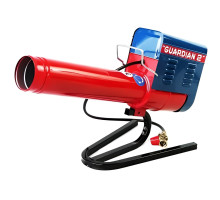
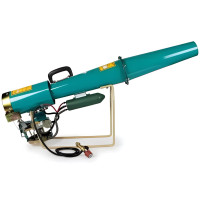
Propane guns such as the KBS M1 and KBS E1 produce loud sonic booms that mimic gunshots. This is one of the most effective means against flocks of birds such as gulls, crows, starlings, and pigeons, especially in large open areas.
Popular Google searches: "propane bird cannon", "bird repellent", "bird repeller for field".
Advantages:
- Large area of operation (up to 3-5 hectares).
- Effective against large flocks.
- Environmentally friendly (runs on propane, without harming the environment).
Disadvantages:
- Noise can disturb people and pets.
- Requires regular propane refilling.
4. Visual deterrents
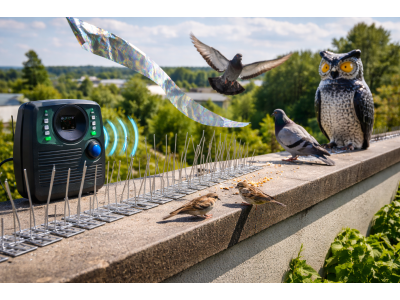
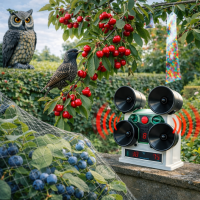
Visual deterrents use visual effects to scare away birds. These can include kites in the shape of predators, reflective tape, balls with predator eyes, or mock owls and hawks. They are effective against pigeons, starlings, bees, and jays.
Popular Google searches: "visual bird deterrent", "bird deterrent for garden", "reflective bird tape".
Advantages:
- Noiselessness and environmental friendliness.
- Easy installation and low cost.
- They work well in combination with other methods.
Disadvantages:
- Effectiveness decreases if birds become accustomed to stationary objects.
- Dependence on weather conditions (for example, kites require wind).
5. Laser repellers
Laser devices produce beams of light that scare birds, especially at night. They are effective against seagulls, crows, and pigeons, especially in warehouses and airfields.
Popular Google searches: "laser bird repeller", "bird repeller for warehouse", "bird repeller for airfield".
Advantages:
- High efficiency in closed spaces.
- Silence.
- Suitable for large objects.
Disadvantages:
- Limited effectiveness outdoors during the day.
- Care must be taken to avoid damaging a person's eyes.
Comparison of repellers: what to choose?
| Type of repeller | Area of operation | Effectiveness against species | Noise level | Application |
|---|---|---|---|---|
| Ultrasonic | Up to 85 m² | Pigeons, starlings, bee-eaters | Silent | Balconies, gardens |
| Bioacoustic (Kite-8) | Up to 10-15 hectares | Crows, seagulls, jays | Noisy | Fields, airfields |
| Propane gun (KBS M1) | Up to 5 hectares | Seagulls, crows, starlings | Very noisy | Open areas |
| Visual | Depends on the installation | Pigeons, jays, bee-eaters | Silent | Gardens, vegetable gardens |
| Laser | Up to 1000 m² | Seagulls, crows, pigeons | Silent | Warehouses, airfields |
Popular Google searches: "which bird repeller to choose", "bird repeller reviews", "best bird repeller".
Overview of popular repeller models
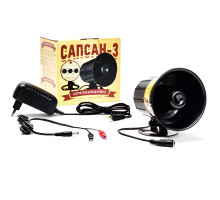
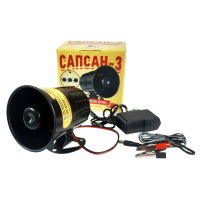
Sapsan-3: universal bioacoustic repeller
Sapsan-3 is a powerful bioacoustic repeller designed to protect large areas (up to 7 hectares). It is effective against crows, rooks, starlings, gulls and pigeons. The device reproduces the sounds of birds of prey, such as a falcon or a hawk, causing panic in pests.
Advantages:
- Adjustable volume and sound selection.
- Power supply from 220 V mains or battery.
- Robust body, resistant to climatic conditions.
Application: Ideal for protecting fields, gardens and warehouses.
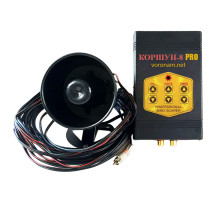
Kite-8: a powerful repeller for large objects
Korshun-8 is another popular bioacoustic repeller model designed to combat crows, gulls, jays, starlings, and bee-eaters. The device has a speaker that provides coverage of up to 10 hectares.
Advantages:
- Five sets of sounds for different bird species.
- Ability to work day, night or 24/7.
- Easy to set up and install.
Application: Suitable for airfields, farms and large agricultural areas.
Propane guns KBS M1 and KBS E1
The KBS M1 and KBS E1 are propane cannons that create loud noises that scare birds away over large areas. They are effective against flocks of gulls, crows, starlings, and pigeons.
- KBS M1: Mechanical model with manual adjustment of shot intervals. Area of effect – up to 3 hectares.
- KBS E1: Electronic version with programmable operating time and cotton intensity. Area of operation – up to 5 hectares.
Advantages:
- High efficiency in open spaces.
- Ease of operation.
- Durability and reliability.
Use in fields, vineyards and airfields.
Visual deterrents
Visual deterrents, such as predator kites (e.g., "Crow" or "Black Kite") and reflective tapes, create a visual effect that scares birds away. They are effective against pigeons, jays, bees, and starlings.
Advantages:
- Affordable price.
- Environmental friendliness and noiselessness.
- Easy to install.
Application: Suitable for gardens, vegetable gardens and small areas.
Benefits of using bird repellers
- Effectiveness. Repellents allow you to protect crops, warehouses and other objects from birds without the use of chemicals.
- Safety. Most devices are environmentally friendly and do not harm either birds or people.
- Versatility. Suitable for controlling various types of birds: crows, gulls, pigeons, jays, bee-eaters and starlings.
- Savings. Reduces costs for restoring damaged crops or cleaning up areas.
Popular Google searches: "bird repeller for summer cottage", "bird repeller price", "starling repeller".
How to choose a bird repeller?
When choosing a device, consider:
- Bird species: For crows and gulls, bioacoustic repellers or propane guns are better suited, while for pigeons and starlings, ultrasonic or visual repellers are better suited.
- Area of the territory. For large fields, choose Korshun-8 or KBS E1 , and for small areas, choose visual repellers.
- Operating conditions If silence is important, choose ultrasonic or visual devices.
Popular Google searches: "bird repeller for home", "bird repeller for balcony", "bird repeller for farm".
Where to buy bird repellers?
A wide range of bird repellers, including Sapsan-3 , Korshun-8 , propane guns KBS M1 and KBS E1 , as well as visual repellers, is presented on the FermaTeh website Here you will find detailed descriptions, specifications and reviews that will help you make the right choice.
Conclusion
Bird repellers are a reliable solution for protection against crows, gulls, pigeons, jays, bees, starlings and other birds. Ultrasonic, bioacoustic, propane guns and visual repellers offer different approaches to solving the problem, allowing you to choose the best option for your needs. Models such as Sapsan-3 , Korshun-8 , KBS M1 and KBS E1 , have proven themselves as effective and durable devices. You can purchase them on the FermaTeh website where a wide selection of bird protection equipment is presented.
Protect your territories from feathered pests with modern repellers and enjoy the cleanliness and safety of your harvest!
Types of repellers: which one to choose?
There are many technologies and methods of scaring. Let's consider the most popular and effective scarers .
1. Acoustic (Bioacoustic) repellers
These devices play sounds that are unpleasant or frightening to specific species of birds or animals.
- Principle of operation: Imitation of the cries of birds of prey (hawks, falcons, owls) or alarm signals of the pest birds themselves (for example, an acoustic crow repeller or a bioacoustic starling repeller ).
- Advantages:
- Highly effective against certain bird species.
- Large coverage area (up to several hectares for professional models).
- A humane method that does not cause physical harm.
- Disadvantages:
- Can create noise pollution for people and pets.
- Birds can get used to monotonous sounds over time (it is important to choose models with varied and random signals).
- Efficiency may depend on terrain and obstacles.
- Where and how to place: On hills, in the center of the protected area, directing the speakers in the right direction. For large areas (fields, gardens, vineyards) several devices may be needed. Ideal for open spaces.
2. Ultrasonic repellers
They generate high-frequency sound waves that are inaudible to humans, but extremely unpleasant to many animals and some birds.
- Principle of operation: Ultrasound creates an uncomfortable environment that forces pests to leave the area of action of the device. Often used as an ultrasonic animal repeller , including a rodent repeller , a dog repeller , a cat repeller , and a mole repeller (often in the form of pins dug into the ground, sometimes on a solar battery ).
- Advantages:
- Silent for people.
- Compact and easy to install.
- Safe for the environment.
- Wide range of animals repelled (depends on model and frequency).
- Disadvantages:
- Limited range of action.
- Ultrasound does not pass well through walls, fences, and dense vegetation.
- Effectiveness against birds is often lower than that of acoustic models.
- Some animals (especially young or old) may have reduced sensitivity to ultrasound.
- Where and how to place: near pest activity areas (burrows, trails, feeding areas, home entry areas). Indoors, point to open space. Outdoors, consider barriers. Multiple devices may be required to protect a perimeter.
3. Visual deterrents
Visual stimuli are used to scare away birds.
- Principle of operation: Imitation of predators (model owls, hawks), shiny and moving objects (ribbons, balls with eyes, spirals), scarecrows.
- Advantages:
- Simplicity and low cost.
- Silence.
- Environmental friendliness.
- Good as a visual deterrent for a garden or small vegetable patch.
- Disadvantages:
- Birds quickly get used to static objects (it is necessary to periodically change their location or use dynamic models).
- Efficiency is often lower than that of sound or other active systems.
- They work best in combination with other methods.
- Where and how to place: In places where birds congregate – on tree branches, roofs, fences, flower beds. Ensure good visibility and movement (for dynamic models).
4. Propane Repellents (Thunder Guns)
Powerful devices that create very loud bangs that simulate gunshots.
- Principle of operation: Periodic explosion of a propane-air mixture in the barrel of the gun. The sound pressure effectively scares away birds and wild animals from large areas.
- Advantages:
- Extremely high efficiency in large open spaces (fields, airfields, landfills).
- Huge coverage area (up to 5-7 hectares or more).
- Reliable crop protection from birds and large animals.
- Disadvantages:
- Very high noise level (may require approval from neighbors and local authorities).
- Requires regular propane refueling.
- Relatively high cost.
- Animals may become accustomed to it if used too frequently and monotonously (it is important to set the intervals and random mode).
- Where and how to place: In the center of large fields or gardens, at a safe distance from residential buildings and places where people/pets live. Install on a stand or tripod for better sound distribution. If you are looking for where to buy a field bugle , pay attention to models with adjustable intervals and cotton strength.
5. Laser repellers
Modern devices that use a laser beam to disorient and scare birds.
- How it works: A moving laser beam (usually green) is perceived by birds as a physical threat or predator, forcing them to leave the area.
- Advantages:
- Silent operation.
- High efficiency, especially in low light conditions (dusk, dawn, indoors).
- Long range (professional models).
- Birds do not get used to the laser as quickly as they do to other methods.
- Disadvantages:
- High price of laser bird repeller .
- Direct visibility is required, effectiveness is reduced in bright sunlight.
- It is necessary to avoid the beam getting into the eyes of people and animals.
- Less effective against terrestrial animals.
- Where and how to place: Optimal for large spaces (warehouses, hangars), roofs, fields in the morning/evening hours. Install so that the beam covers the maximum area, avoiding direct light onto roads or windows of residential buildings.
6. Other methods (Briefly)
- Physical barriers: Nets, spikes, strings – prevent birds from landing on certain surfaces (window sills, cornices, monuments). Effective, but local.
- Repellents: Chemicals with an unpleasant odor or taste to birds/animals. Limited use, require reapplication, can be dangerous.
Specific solutions for different needs
Effective bird protection requires tailored solutions, as the needs of a small private garden are different from those of a large agricultural field.
Garden Repellents: Protecting Crops and Homesteads
For small backyards, vegetable gardens or orchards, where silence and aesthetics are important, less aggressive and more compact solutions are suitable. Here the main goal is to protect berries, fruits and vegetables without creating discomfort for neighbors. The best options are:
- Ultrasonic repellers: Models like the GREENMILL GR5108 Battery-Powered Animal Repeller with Controller can work effectively in small areas, scaring away birds and other small pests while remaining inaudible to humans. Their battery-powered nature makes it easy to move the device.
- Visual deterrents: "Crow Bird Scarer Kit with Flagpole" or reflective elements create a movement and predator effect, scaring birds away. They do not require power and are completely silent.
- Bioacoustic repellers with adjustable volume: Some models, such as the "Sapsan 3 Sound Bird Repellent", may have volume control and a light relay, allowing you to adjust their operation according to the time of day and proximity to residential buildings.
For gardens, it is often important that the repeller is unobtrusive, but at the same time provides reliable protection against birds pecking at berries and fruits.
Solutions for fields and large farms
Large agricultural areas, where the area is measured in hectares, require powerful and long-range systems. The main criteria here are maximum coverage, reliability and the ability to operate automatically.
- Propane Bird Scarers: These are the best choice for fields where high noise levels are permitted. Models such as the KBS-U1 Electronic Remote Control Propane Bird and Animal Scarer with different ranges (200m, 500m, 2000m), or the KBS-E2 Electronic Propane Stand Mounted Gun and KBS E3 Electronic Propane Gun provide wide coverage and can be programmed for specific firing intervals.
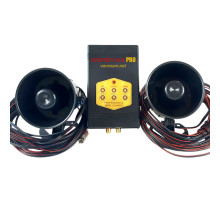
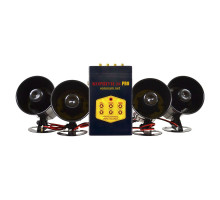
- Powerful bioacoustic systems: For large areas, the "Sound Bird Repellent Kite 16" (15 ha, 4 speakers) or the "Sound Bird Repellent Kite 8" (10 ha, 2 speakers) are effective. They create realistic sounds that cover a significant area.
Selection criteria: How to choose the perfect repeller?
To choose the most effective repeller, you need to consider several key aspects that affect its functionality and appropriateness of use in your particular case.
Universal Bird Scarers: Myths and Reality
The idea of a “one-size-fits-all” deterrent that will work equally well against all bird species in any area is more of a myth. While some devices, such as propane guns, can deter a wide range of birds and even wildlife due to their intense sound effects, their effectiveness may be reduced for certain species or under certain conditions. A comprehensive approach or specialized solutions tailored to the specific problem are often needed to achieve the best results. For example, bioacoustic deterrents that mimic birds of prey can be very effective against sparrows but less effective against ducks that are accustomed to noise.
Key selection factors:
- Area of protection: For small areas such as a garden, ultrasonic or visual repellers may be suitable. For large fields (10-15 hectares and more), powerful bioacoustic systems or propane guns are needed that can cover an area of up to 2000 m, like some KBS-U1 models.
- Pest bird species: Some repellers are specialized. For example, the "Sapsan-3 Bird Repellent" is effective against the golden rat. Other species may require different sound profiles or visual effects.
- Power source: The availability of electricity on the site determines whether you can use devices that operate on a 220V/12V network, or whether it is better to choose battery-powered models, such as the "GREENMILL GR5108 Animal Repellent".
- Noise level: Propane guns produce a very loud sound that may be unacceptable near residential areas. Bioacoustic and ultrasonic devices are less noisy or silent to humans.
- Weather resistance: Devices for outdoor use must be resistant to rain, wind, and temperature extremes.
- Ease of installation and maintenance: Some systems require professional installation, while others are easy to install yourself. It is also important to consider the availability of spare parts, such as reducers, diaphragms or piezos for propane guns.
Main types of bird repellers and their features
The choice of repeller depends on many factors, including the size of the area, the type of birds causing problems, and the acceptable noise level. Let's consider the main categories presented in the catalog.
Bird repellers by type: Selection by principle of action
There are different types of repellers on the market, each of which uses its own approach to deter feathered pests:
- Bioacoustic repellers: These devices reproduce the sounds of birds of prey or the alarming cries of pest birds, creating the illusion of danger. Examples are the “Sound Bird Repellent Korshun 16” with four speakers for large areas (up to 15 hectares) or the “Sound Bird Repellent Korshun 8” for smaller areas (up to 10 hectares). The “Sapsan-3” model is effective against the golden rat (bee-eater) and can be powered by 220V/12V.
- Propane Scarers: These are powerful devices that simulate gunshots or explosions, creating a loud sound that scares birds and wildlife away. They are ideal for large fields.
- Ultrasonic repellers: Emit high-frequency sounds that are inaudible to humans but unpleasant to birds. An example is the “GREENMILL GR5108 Battery-Powered Animal Repellent with Controller,” which can also be effective against birds in small areas, such as a garden.
- Visual deterrents: Use reflective elements, flags, predator decoys, or rotating structures to create the effect of a predator or danger. Example: “Raven Bird Deterrent Kit with Flagpole.”
- Laser repellers: Use laser beams to create moving spots of light that birds perceive as a physical threat.
See also in the catalog
Read also