How to choose the right lawn seeds and grow the perfect lawn: a practical guide from AgroGrass
Creating a flawless green carpet on a personal plot, agricultural complex or commercial facility is a task that requires a deep understanding of plant biology and precise adherence to agrotechnical standards. Many plot owners are faced with the fact that after rapid germination, the grass begins to turn yellow, become bald or overgrown with weeds. The main reason for such failures lies in the use of poor-quality or unadapted seed material. To obtain a coating that is resistant to loads and climatic fluctuations, it is necessary to select high-quality lawn seeds from AgroGrass , which are developed taking into account the specifics of Ukrainian soils.
A beautiful lawn does not grow by itself, because each variety in the grass mixture performs its own clear biological role. From the experience of farmers, it is known that universal solutions often lose to specialized formulations, since the lighting conditions, moisture and soil type on each site are unique. Before buying seed, it is important to assess the level of future load on the cover, the availability of artificial irrigation and the terrain. A competent approach to planning will save time and financial resources for further restoration of the grass stand.
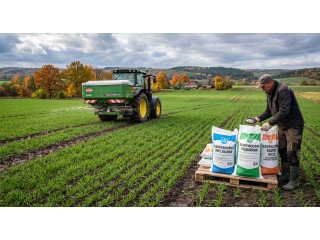
In order for plants to form a powerful root system and a dense above-ground mass, they need balanced nutrition from the first days of life. Simultaneously with the preparation of the site, it is important to apply special fertilizers for lawn grass , which will ensure a quick start and high seed germination. Comprehensive work, combining high-quality plant genetics and proper mineral support, guarantees the formation of a dense turf that can displace waste vegetation and resist trampling.
1. Why the choice of grass mixture determines the future of your lawn
When choosing a material for landscaping, the key mistake is to focus solely on the appearance of the picture on the package. As practice shows, the lifespan and durability of the coating depend on the genetic characteristics of the grasses. Professional lawn seeds are created by carefully combining different types and varieties of grasses, where each component compensates for the shortcomings of the other. For example, one grass provides rich color, another - drought resistance, and the third - quick regeneration after mowing.
It is important to take into account the Ukrainian climate, which in recent years has been characterized by abnormally hot summers and snowless winters with sharp temperature drops. Under such conditions, European-bred grasses that are not adapted to prolonged air drought can completely freeze or burn out in the first year. AgroGrass products undergo strict selection and field testing, which allows you to obtain a grass stand that can withstand extreme climatic challenges without losing its decorativeness. In short, by purchasing a proven selection, you are investing in the durability of your landscape.
2. Varietal composition: what quality lawn seeds actually contain
The basis of any durable covering are three main types of grasses: meadow fescue, red fescue and pasture ryegrass. Their percentage ratio in the mixture determines the intended purpose of the lawn - whether it will be sports, decorative, shade-tolerant or drought-resistant.
Meadow grass (Poa pratensis) - the basis of longevity
This grass forms a powerful underground system due to underground shoots (rhizomes), which firmly hold the soil. The thin-legged grass has a standard emerald shade and is extremely resistant to low temperatures and mechanical loads. However, it has a slow initial growth, requiring careful care in the early stages of vegetation. In professional AgroGrass mixtures, its share is basic for creating durable park and sports lawns.
Red fescue (Festuca rubra) - shade and drought tolerant
Fescue is known for its undemanding soil and lighting conditions. It has a fine leaf texture that creates the effect of a thick, silky carpet. Thanks to its deep root penetration, this lawn grass easily tolerates long periods without watering and feels great in shaded areas under trees or near buildings, where other grasses quickly die from lack of sunlight.
Perennial ryegrass (Lolium perenne) - quick start
The main advantage of ryegrass is its extremely high germination and development rate. Already 5-7 days after sowing, it forms a green mass, protecting the area from erosion by rain and suppressing the growth of weeds. It is ideal for quick repair of damaged grass. AgroGrass mixtures use modern low-growing ryegrass varieties that do not require daily exhausting mowing.
3. Step-by-step technology for soil preparation and sowing
Even the best lawn grass will not be able to form a high-quality grass stand if the basic rules of site preparation are violated. Mistakes made at this stage are almost impossible to correct after the seedlings appear. The whole process is divided into several sequential steps, each of which directly affects the final result.
The first step is to completely clean the area from debris, stones, construction material residues and perennial weeds. To destroy harmful weeds, such as wheatgrass or thistle, it is recommended to treat with continuous-action herbicides two weeks before the start of excavation work. After the weeds have died, the area is dug up to a depth of 20-25 centimeters, carefully breaking up large lumps of earth.
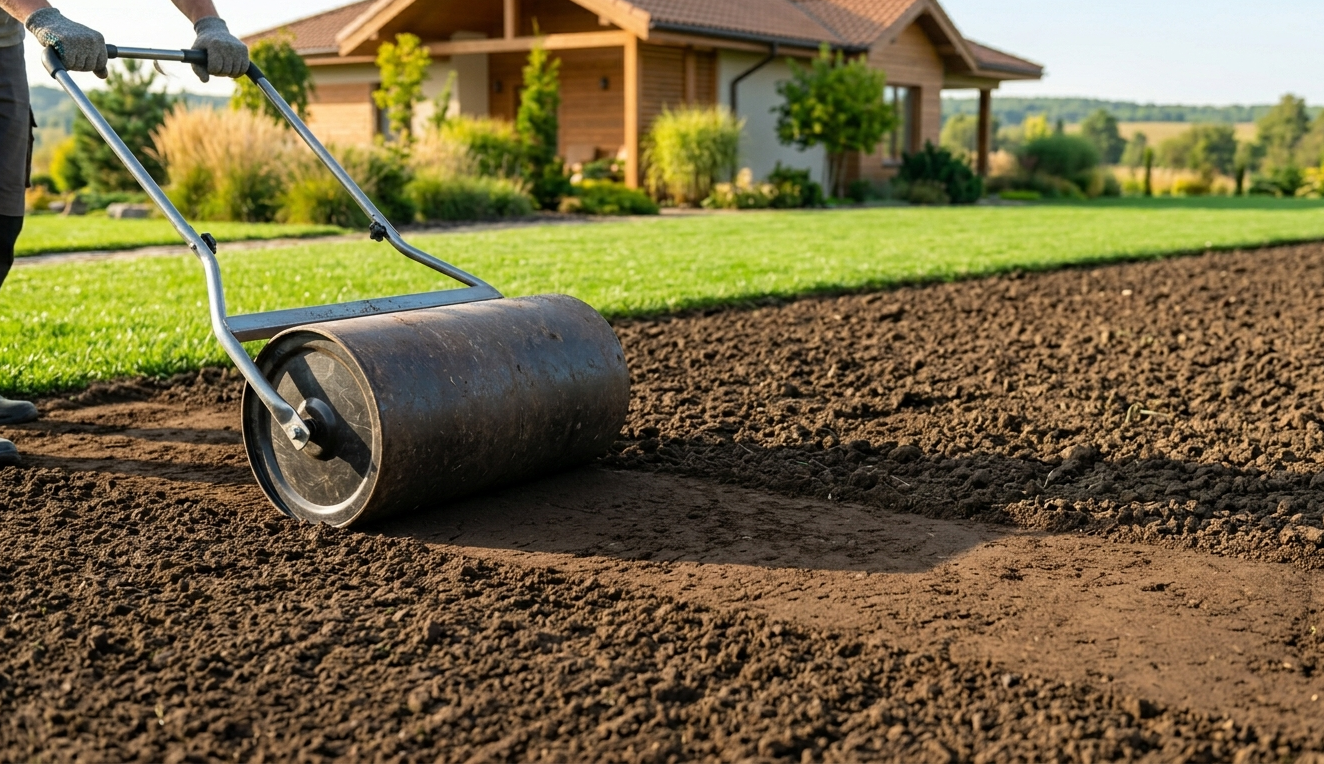
The second step is leveling and compaction. The surface should be perfectly flat, without holes and bumps, so that water does not stagnate in the lowlands during irrigation, causing the roots to rot. After planning the relief, the soil must be compacted using a special roller weighing 60-80 kilograms. This prevents the ground from subsiding after the first rains and allows you to control the depth of seed placement.
The third step is direct sowing. The optimal seeding rate is 35-40 grams per square meter. For uniform distribution of seeds, the plot is first covered lengthwise and then crosswise, using a special seeder. After that, the seeds are placed in the soil with a rake to a depth of no more than 0.5-1 centimeter and rolled again with a roller to ensure close contact with the ground.
4. Feeding system: which fertilizers for lawn grass to choose
Regular mowing of greenery leads to constant removal of nutrients from the soil. Without artificial replenishment of the balance of macro- and microelements, the soil quickly becomes depleted. To maintain the health of the lawn, it is necessary to use specialized mineral fertilizers for lawn grass, which are selected according to the season and phase of plant development.
In spring and summer, plants need a large amount of nitrogen (N), which stimulates active leaf growth, ensures rapid recovery after winter and gives the grass a rich dark green color. Phosphorus (P) and potassium (K) during this period support the development of a strong root system and increase resistance to summer heat. Complex mineral compounds with the formula NPK 20-10-10 or similar are optimal for the spring-summer period.
Closer to autumn, the feeding strategy changes dramatically. Starting from the end of August, it is necessary to completely eliminate or minimize nitrogen to stop the growth of young leaves that will not have time to harden before frost. Autumn fertilizers for lawn grass should contain high doses of phosphorus and potassium (for example, NPK 5-15-30). Potassium strengthens plant cell walls, reduces the content of free water in tissues and increases the concentration of sugars, which ensures successful wintering of cereals and protects them from snow mold.
5. Practical care scenarios in the Ukrainian climate
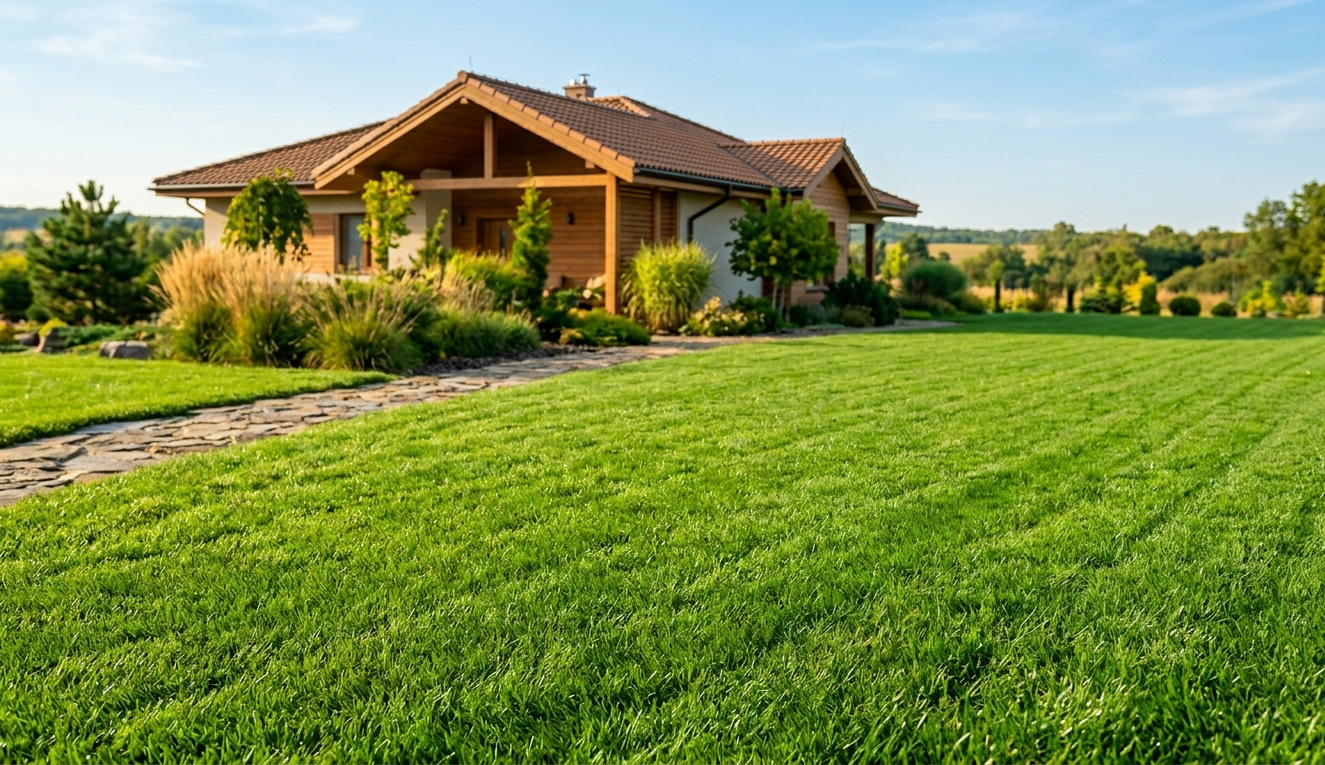
Proper care of the grass stand is based on three pillars: regular watering, timely mowing and periodic aeration. In real operating conditions, each element has its own technological subtleties, non-observance of which can nullify all the efforts spent on sowing.
Watering is a critically important factor, especially in the southern and central regions of Ukraine, where summer temperatures often exceed 30 degrees. The main rule of expert care is to water rarely, but abundantly. Frequent and superficial watering stimulates the development of roots in the upper layer of soil, which makes lawn grass completely defenseless against drought. The soil should be soaked with moisture to a depth of at least 15 centimeters, which requires about 20-30 liters of water per square meter. Irrigation should be carried out exclusively in the morning or evening hours to avoid sunburn of the leaves and excessive evaporation of water.
Mowing grass is not just a decorative procedure, but a way to stimulate the tillering of grasses. The first mowing is carried out when young shoots reach a height of 8-10 centimeters, while only the tips are cut (no more than 1-2 centimeters). In the future, an iron rule applies: no more than one third of the current height of the plants can be cut at a time. Mowing too low weakens the grass, opening the way for sunlight to the soil surface, which provokes the rapid germination of weed seeds. The optimal height of a home lawn is 4-5 centimeters, and in dry summer periods it is recommended to raise it to 6 centimeters.
6. Comparative characteristics of solutions: AgroGrass vs. alternatives
Before making a decision to buy seed material, each landowner weighs the financial costs and the expected result. There are a large number of cheap feed mixtures on the market, which are often sold under the guise of lawn grasses. Below is a detailed comparison of professional solutions from AgroGrass and budget market alternatives.
- Mixture composition: AgroGrass uses exclusively certified varieties of fescue, fescue, and short-growing ryegrass. Budget counterparts often contain up to 70% forage ryegrass or meadow fescue, which forms coarse tufts and quickly becomes bald after two years.
- Seed germination: The germination rate of professional material is at least 92-95%, which guarantees a uniform green carpet without bald spots. Cheap lawn seeds usually have a germination rate of 60-70%, which doubles the actual seeding rate, negating all savings.
- Disease and drought resistance: Thanks to adaptation to the Ukrainian climate, AgroGrass cereals are resistant to rust, powdery mildew, and wilting. Forage grasses from cheap mixtures instantly react to the first heat by yellowing and dying off the above-ground mass.
- Mowing frequency: Specialized dwarf varieties grow mainly in width, forming a dense turf, so they need to be mowed much less often. Low-quality grass quickly stretches upwards, requiring weekly maintenance.
Thus, the final price of creating a lawn from cheap material turns out to be much higher due to the need for regular reseeding, increased costs for herbicides and constant repair of bald patches. AgroGrass professional mixtures provide a stable result for many years, minimizing your efforts to maintain the territory.
7. Frequently Asked Questions (FAQ)
What is better to choose: rolled lawn or sown from AgroGrass seeds?
Rolled turf gives an instant visual effect, but its price, including installation, is extremely high. In addition, rolls are grown in special fields and may not take root well when the soil type changes. Sowing lawn seeds allows plants to adapt to the conditions of your specific site from the first day. AgroGrass seeded lawn, with proper care, catches up with rolled turf in density after just two months, but costs several times less and lasts much longer.
When is it better to sow lawn grass in Ukraine - in spring or autumn?
Sowing can be done from April to October, but the ideal period is considered to be early autumn (September - early October). At this time, the extreme summer heat subsides, the soil is well warmed up, and morning dews provide natural moisture. This allows the seeds to germinate together and form strong roots before the onset of stable frosts. Spring sowing is also effective, but requires regular monitoring of soil moisture, as the May sun can quickly dry out young seedlings.
Can I apply lawn grass fertilizer immediately when sowing seeds?
Yes, this is standard professional practice. Starter mineral complexes with a high phosphorus content are applied immediately before sowing under the final cultivation or rake. Phosphorus stimulates the rapid growth of the root system of young seedlings. The main thing is to evenly distribute the granules over the surface of the plot to avoid local excessive concentration of salts, which can cause chemical burns of the delicate roots of newly sprouted grass.
Why do bald spots appear on the lawn and how to properly repair them?
The main causes of bald spots are water stagnation, snowmelt, mechanical damage or the activity of domestic animals. To repair the damaged area, it is necessary to carefully comb out the dry grass with a metal rake, loosen the soil to a depth of 2-3 centimeters, pour in fresh fertile substrate and sow the AgroGrass repair mixture, mixing it with nitrogen fertilizers. After that, the repair site must be compacted and watered daily until stable shoots appear.
How often should aeration be carried out and why is it necessary?
Aeration is the process of piercing the turf to improve the access of oxygen, water and nutrients to plant roots. Over time, the topsoil becomes heavily compacted, forming an impermeable crust of dead grass and roots, which leads to oxygen starvation of cereals. On standard loamy soils, aeration is necessarily carried out once a year - in the spring, after the soil dries out, or in the fall during preparation for winter. On heavy clay areas or in areas with a high level of load, the procedure can be repeated twice a season.