Makosh foliar fertilizers: how to choose foliar feeding for crops
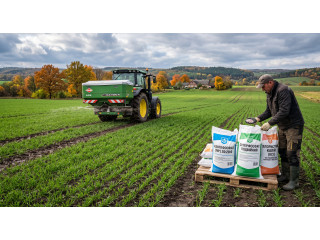
In modern agriculture, Makosh foliar fertilizers are used not as a replacement for the main application, but as a precise tool for correcting nutrition during critical phases of plant development. When the root system is weaker due to cold, drought, soil compaction or lack of available elements, Makosh foliar fertilizers help support the crop faster through the leaf surface.
As practice shows, foliar feeding is most needed when the plant is already forming future yields, but field conditions do not allow the full use of the potential of soil nutrition. In such situations, foliar feeding makes it possible to more accurately fill the deficiency of boron, zinc, manganese, copper, molybdenum, phosphorus, potassium or complex elements.
In short, foliar feeding is not needed to “give more of everything”, but to give exactly what the crop lacks at a particular moment. That is why the choice of Makosh microfertilizers should be made not only by the price of a canister or bag, but also by the crop, development phase, deficiency symptoms, soil analysis, weather and technological map of the farm.
Why foliar fertilizers are important for Ukrainian farms
The Ukrainian climate is becoming less predictable: spring cooling, sharp temperature drops, periods of drought, uneven precipitation, soil compaction after heavy machinery. In such conditions, even correctly applied mineral fertilizers do not always work stably. An element may be in the soil, but remain unavailable to the plant due to pH, lack of moisture, weak root activity or antagonism between elements.
From the experience of farmers, it is at such moments that foliar feeding allows you to quickly support the plant. It does not create a supply of nutrition for the entire season, but helps to get through the stressful period, activate metabolic processes, improve the development of the root, leaf mass, generative organs or grain filling. This is especially important for crops with a high need for microelements: rapeseed, sunflower, corn, soybeans, grain crops, vegetables and fruit and berry crops.
For the farm, it is a matter of economics. If a crop enters a critical phase with a deficiency of boron, zinc, manganese or phosphorus, yield potential can decline before the problem becomes visually apparent. Therefore, quality foliar feeding often acts as insurance for investments in seeds, basic nutrition, plant protection and field operations.
When foliar feeding is really necessary
Foliar fertilizers should be used when there is a specific agronomic reason. Most often, this is a deficiency of trace elements, a weak start to the crop, stress after herbicide loading, cold soil, drought, intensive growth or the phase of formation of generative organs. For cereals, this can be tillering, emergence into a tube or flag leaf. For rapeseed - rosette, renewal of spring vegetation and budding. For sunflower - active growth of leaf mass and preparation for basket formation. For corn - early phases, when future productivity is laid.
A special case is hidden deficiencies. The plant still looks normal, but the growth rate is already decreasing. In real conditions, this is often not immediately visible: the field seems to be “holding on”, but the crop develops more slowly, reacts less to basic nutrition, and goes through the phase unevenly. In such situations, foliar micronutrients help not to treat the consequences, but to support the physiology of the plant in a timely manner.
When foliar fertilizers are not suitable
It is important not to exaggerate the possibilities of foliar feeding. If the soil is critically deficient in essential nutrients, there is no moisture, the soil structure is disturbed or the crop is severely damaged by pests, a single foliar treatment will not compensate for the systemic problem. Foliar fertilizers do not replace the main application of nitrogen, phosphorus, potassium, sulfur, calcium or magnesium in full.
Also, foliar feeding should not be carried out in the heat, on a limp plant, before rain, during strong winds or in a tank mixture without checking compatibility. In such cases, you may get a weak effect, spots on the leaf or loss of working solution. The correct alternative is to postpone the treatment, change the rate, divide the application or first stabilize the main problem in the field.
What foliar fertilizers Makosh uses in the field
The Makosh foliar fertilizer category includes liquid micronutrients, crystalline formulas, simple salts, and magnesium sulfate. This is convenient for practical selection, as different forms cover different tasks. Liquid products are more often chosen for quick work on a specific element. Crystalline formulas are suitable where complex nutrition or work through a solution is required. Simple salts are used as a source of individual elements in understandable technological schemes.
Makosh products for foliar feeding include formulas for different purposes: complex NPK solutions, products with boron, zinc, copper, manganese, molybdenum, phosphorus, universal liquid microfertilizers and crystalline fertilizers for water-soluble application. This range allows you not to work with one universal approach for all crops, but rather to select the product for real needs.
Liquid micronutrients for quick correction
Liquid foliar fertilizers are convenient for farms that often work in tank mixtures with plant protection products. They are easier to dose, faster to prepare the working solution and used in field conditions, when there is a short technological window for treatment. For example, products with boron are appropriate for crops sensitive to boron deficiency, and zinc formulas are appropriate for corn and crops where zinc affects initial development and enzymatic processes.
Copper and manganese are especially relevant for cereal grains, and molybdenum for legumes, where nitrogen fixation is important. Phosphorus liquid formulas can be useful in the early stages, when cold soil limits phosphorus availability through the root. Universal micronutrients are used where it is necessary to gently support the plant with a complex of elements without narrowly correcting a single deficiency.
Crystalline fertilizers for complex nutrition
Crystalline foliar fertilizers are chosen when good solubility and flexibility in the preparation of the working solution are required. Formulas such as 10-20-30, 10-53-10 or 21-21-21 have different ratios of nitrogen, phosphorus and potassium, so they cannot be evaluated only as a “complex fertilizer”. The choice depends on the phase of the crop.
Formulas with increased phosphorus are more appropriate for initial development, root activity and work in cold soil conditions. Formulas with more potassium are useful in phases where water regulation, stress resistance, bulking and product quality are important. Balanced NPK formulas are used to support overall growth when there is no pronounced deficiency of one element, but the crop needs comprehensive assistance.
Simple salts and magnesium sulfate
Simple salts make sense where the agronomist understands exactly which element needs to be added. This is not an option for work “just in case”. For example, magnesium sulfate can be useful in schemes where it is necessary to support magnesium and sulfur nutrition. Magnesium is associated with photosynthesis, and sulfur is important for protein metabolism and more efficient nitrogen work.
In real conditions, simple salts are often used by experienced farms that have their own schemes, analyses, field history, and understand the compatibility of components. If there is no such base, it is safer to start with ready-made solutions and consult an agronomist.
How to choose Makosh microfertilizer for a crop
The main mistake when choosing foliar fertilizers is to focus only on the name of the crop. In fact, four parameters need to be taken into account: crop, development phase, actual deficiency and application conditions. The same product may be appropriate in one field and poorly effective in another, if the soils are different, different pH, different moisture or different technology.
The correct logic is this: first define the task, then select the element, then select the form and rate. If the task is to support rapeseed before budding, one of the key elements will be boron. If it is necessary to support corn at the start, zinc and phosphorus are often looked at. If the grains have weak color, slow tillering or signs of a lack of trace elements, it is worth evaluating manganese, copper, magnesium and sulfur.
Cereal grains
For wheat, barley and other cereals, foliar feeding is most often used in the tillering, tube formation and flag leaf stages. During these periods, the crop is actively forming a productive stem, leaf apparatus and future grain filling. From the experience of farmers, cereals respond well to support with manganese, copper, magnesium, sulfur and complex formulas, if these elements really limit development.
If the field has a high pH or has shown signs of chlorosis, uneven growth or poor tillering in previous years, foliar correction may be very appropriate. But if the main problem is a lack of nitrogen or severe root damage, micronutrients will only be part of the solution, not the complete answer.
Corn
Corn is sensitive to starting conditions. In cold soil, it often absorbs phosphorus and zinc less well, so early development can be slowed down even with the presence of fertilizers in the soil. For corn, foliar feeding should be planned in the early phases, when the crop is actively forming the root system, leaf mass and laying the potential of the future ear.
Practical corn regimens often consider zinc products, phosphorus formulas, and complex NPK solutions. If crops have experienced cold, herbicide stress, or a long period of no active growth, foliar feeding can help level the field more quickly. But corn should not be treated in extreme heat or after the plant has lost turgor.
Sunflower
For sunflower, it is important not to miss the period of active growth, when the crop forms a powerful leaf surface and prepares to lay the basket. At this time, boron, zinc, magnesium, sulfur and overall nutritional balance are important. Boron deficiency can negatively affect generative development, so boron foliar fertilizers are often included in the scheme even before obvious problems appear.
As practice shows, sunflowers do not like gross mistakes in tank mixtures. If a herbicide, fungicide, insecticide and micronutrient are applied at the same time, it is necessary to check compatibility, water quality, pH of the working solution and temperature during treatment. Otherwise, instead of support, you can get additional stress.
Rapeseed
Rapeseed is one of the crops where foliar feeding is of particularly high practical value. It is sensitive to boron, sulfur, magnesium, molybdenum and the general balance of elements. In the fall, top dressing helps to form a strong rosette and prepare the plant for winter. In the spring, it supports the renewal of vegetation, stem development, budding and future flowering.
It is important to take into account the Ukrainian climate: rapeseed often enters spring after temperature stresses, humidity drops, and leaf damage. Therefore, spring foliar feeding should not be a formality, but part of the crop recovery system. If the plant is weakened, it is better to select the norm and tank mixture carefully.
Soybeans and other legumes
For soybeans, molybdenum, boron, magnesium, sulfur and elements that affect the work of symbiotic nitrogen fixation are of particular importance. Molybdenum is often considered in connection with nitrogen metabolism and the work of nodule bacteria. But it is important not to confuse foliar feeding with seed inoculation: these are different tools that work at different points in the technology.
If soybeans are starting slowly, are pale, or are stressed, foliar feeding can be helpful. But if the problem is soil compaction, weak roots, or a herbicide error, you need to look beyond that: micronutrients will only help within the scope of their task.
Vegetable and fruit crops
For vegetable and fruit crops, foliar feeding is often used more often than in field crops, because here the price of a mistake in product quality is higher. Potassium, calcium, magnesium, boron, zinc and complex formulas can affect marketability, uniformity of development, stress resistance and fruit quality.
In such crops, it is especially important not to exceed the concentration of the working solution. The leaf surface can be sensitive and the risk of burns is higher. Therefore, rates, phases and compatibility must be checked more carefully than in standard field schemes.
How to assess the deficit and not make a mistake with the choice
The best approach is to combine soil analysis, visual diagnostics, field history, crop knowledge, and consultation with an agronomist. Visual symptoms are helpful but not always accurate. Yellowing leaves can be related to nitrogen, magnesium, sulfur, manganese, root problems, herbicide stress, or weather. Without context, it’s easy to buy the wrong fertilizer.
Therefore, before buying Makosh foliar fertilizers, it is worth answering a few questions: what crop is growing in the field, what is the development phase, what is the predecessor, what is the pH, when were the main fertilizers applied, were there any stresses, what water is used for spraying, what preparations are planned for the tank mixture. The more accurate the answers, the lower the risk of unnecessary expenses.
Soil analysis and agronomic consultation
A soil audit helps to understand not only “what is lacking”, but also why an element may be unavailable. For example, in one field there may be enough phosphorus in reserve, but due to cold or pH the plant does not receive it at the right time. In another field the shortage may be real, and then a single foliar application will not replace a systematic correction of technology.
Agronomic consultation is useful because it translates the analysis into a practical solution: which formula to take, when to apply, what to combine with, what rate to choose, when to repeat the treatment and when it is better not to take risks. For large farms, this is a matter of saving the budget, for small ones - a matter of avoiding mistakes that are difficult to correct during the season.
Phase of cultural development
Every crop has phases when nutrition particularly affects the future result. If you apply fertilizer too early, the plant may not use it fully. If you apply it too late, part of the potential will already be lost. Therefore, foliar feeding should be planned not just according to the calendar, but according to the actual phase of development.
For cereals, this is tillering, emergence into a tube, flag leaf. For corn, the early phases of intensive growth. For sunflower, the period before the formation of a basket. For rapeseed, autumn rosette, spring renewal, budding. For soybean, the development of vegetative mass, budding, the beginning of flowering. It is during these periods that microelements can have the greatest practical value.
Compatibility in tank mixes
Many farms apply foliar fertilizers together with pesticides to avoid making an extra pass with the sprayer. This is logical, but not always safe. It is necessary to take into account water quality, pH, hardness, temperature, mixing sequence, working solution concentration and compatibility of specific preparations.
A practical tip is simple: before large applications, test the mixture in a small container. If the mixture separates, precipitates, heats up, or changes consistency, it should not be applied to the field. It is also not advisable to mix too many components at once, especially on stressed crops.
Practical scenarios for using foliar fertilizers
Scenario 1: Cold spring and weak start
After a cold spring, crops can have a weak start even in fields with normal nutrient supplies. Roots work slowly, phosphorus is absorbed worse, and leaf mass grows unevenly. In such a situation, phosphorus or complex foliar formulas may be appropriate, and for corn, zinc supplementation may also be appropriate.
The goal of the treatment is not to “overcome” the plant at any cost, but to help it go through the early phase more steadily. If the soil remains cold and wet, the effect may be gradual. If warmth arrives after the treatment, the crop often reacts more noticeably.
Scenario 2: drought and high temperatures
During drought, foliar feeding should be applied very carefully. The plant closes its stomata, reduces the intensity of metabolism, and the risk of burns increases. In such a situation, it is better to work in the morning or evening hours, reduce the concentration, avoid aggressive tank mixtures, and do not process a crop that has lost turgor.
Potassium and anti-stress schemes can be useful, but they do not replace moisture. If the drought is critical, foliar fertilizer will not create a crop where the plant physiology has already stopped. An honest assessment of the field condition is important here.
Scenario 3: Herbicide stress
After herbicide stress, a crop may temporarily stop growing, change color, or lose its growth rate. In such cases, foliar feeding is often used as a gentle support. But it is not necessary to immediately add a strong mixture of trace elements if the plant has not yet recovered.
It is better to assess the condition a few days after treatment, check the weather forecast and choose a moderate scheme. The goal is to help the crop return to active growth, not add another stress.
Scenario 4: Preparing for the Generative Phase
For rapeseed, sunflower, soybean, vegetable and fruit crops, the phases before flowering, budding or formation of productive organs are critical. During this period, a deficiency of boron, molybdenum, zinc, potassium or magnesium can affect setting, development of generative organs and harvest quality.
This is where foliar fertilizers have a strong agronomic logic. They provide an opportunity to support the plant when the need is high and there is little time for correction through the soil. But the rate must be selected carefully, especially if the crop is entering the flowering phase.
How do Makosh foliar fertilizers differ from cheaper analogues?
Cheaper fertilizer is not always worse, but the risk must be assessed soberly. In foliar feeding, not only the amount of the element on the label is important, but also the form, solubility, stability in the working solution, compatibility, purity, concentration, application recommendations and agronomic support. If the product is poorly soluble, precipitates or works unstable in the tank mix, the savings in price can turn into a loss of efficiency.
For the farm, it is important not only to buy microfertilizers cheaper, but also to get a predictable result. If the treatment is carried out in a critical phase, the error costs more than the difference in price between the products. This is especially true for intensive technologies, expensive seeds, high seeding density and crops with high margins.
Makosh foliar fertilizers should be considered as part of a nutrition system, not as a random purchase before spraying. They give the best effect when there is a clear goal: correction of deficiency, support after stress, work in a specific phase or strengthening technology for the planned harvest.
Typical mistakes when applying foliar feeding
- Treatment without diagnostics: the farm buys fertilizer on the advice of a neighbor, but the problem in the field has a different cause.
- Phase delay: application is carried out when the crop has already lost some of its potential.
- Excessive tank mix: Too many products are added to one tank without checking compatibility.
- Working in the heat: spraying on a stressed plant increases the risk of burns and poor effectiveness.
- Ignoring water quality: hard or pH-inappropriate water can reduce the stability of the solution.
- Attempting to replace basic nutrition: foliar fertilizers do not cover the crop's full NPK needs for the season.
- Choosing only by price: a cheaper canister does not always mean a cheaper hectare if the effect is unstable.
How to buy Makosh foliar fertilizers and correctly estimate the price
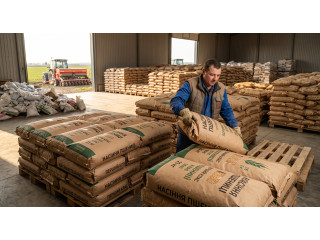
Before buying, it is worth considering not only the price per liter or kilogram, but also the cost per hectare, the application rate, the number of treatments, compatibility with the planned crop protection products and the expected task. If the product is used in a critical phase, it is not the lowest price that is more important, but the stability of work and the correct selection.
It is advisable to buy Makosh foliar fertilizers when the farm understands which crop and phase requires top dressing. For cereals, this can be tillering or flag leaf support, for corn - start and zinc nutrition, for rapeseed - boron and sulfur, for soybeans - molybdenum and complex support, for sunflower - boron, zinc and a potassium component.
Delivery throughout Ukraine allows you to plan purchases for farms in different regions. Orders can be organized for Kyiv, Lviv, Kharkiv, Dnipro, Odessa, Zaporizhia and other settlements. Depending on the supplier's conditions, self-pickup, delivery by transportation services, payment on account or cash on delivery may be available.
For whom Makosh foliar fertilizers will be the optimal choice
Such fertilizers are best suited to farms that want to manage nutrition more precisely, rather than working according to a template. If you have a soil analysis, field history, a clear technological map and a desire to close deficits in a timely manner, Makosh foliar fertilizers can be a strong element of the system.
They are also suitable for farmers who see the instability of the weather and want a tool to quickly support the crop. This is especially true for intensive crops, where any stress at a critical phase can affect the future harvest.
When to choose an alternative
If a crop has a systemic deficiency of essential elements due to incorrect basal nutrition, you should not start with foliar fertilizer, but with a review of the entire fertilizer system. If the field has severe compaction, low moisture or a pH problem, it is worth working with soil, structure, land reclamation and basal nutrition. If only a cheap “stop-gap” solution is needed, foliar feeding may not give the expected result.
The right alternative depends on the problem: basic NPK application, ammonium sulfate, urea, UAN, ameliorants, pH correction, organic matter, change in cultivation technology or more accurate soil audit. Foliar fertilizers work best when they complement the system, not cover up the errors of the entire technology.
FAQ: Makosh foliar fertilizers
How to choose Makosh foliar fertilizers for your crop?
Start with the crop, growth stage and potential deficiencies. For corn, zinc and phosphorus are often assessed, for rapeseed and sunflowers, boron, for cereals, manganese, copper, magnesium and sulfur, for soybeans, molybdenum and complex support.
When is it best to apply foliar feeding?
It is best to work during critical phases of crop development, when the plant is actively forming yield. Spraying is preferably carried out in the morning or evening, without heat, strong wind, rain and pronounced plant stress.
Can foliar fertilizers replace basic application?
No. Foliar fertilizers supplement the main nutrition system, but do not replace the crop's full need for nitrogen, phosphorus, potassium, sulfur, calcium, or magnesium for the season. Their task is to quickly correct and support it in the desired phase.
Can Makosh microfertilizers be mixed with plant protection products?
In many schemes, foliar fertilizers are applied together with crop protection products, but compatibility should be checked before application. It is important to consider pH and water hardness, mixing order, temperature, crop condition, and recommendations for specific products.
What does the price of Makosh foliar fertilizers depend on?
The price depends on the formula, concentration, product form, packaging, order volume and delivery. For the farm, it is important to consider not only the price per liter or kilogram, but also the cost of processing one hectare and the expected agronomic task.
Summary: when to buy Makosh foliar fertilizers
Makosh foliar fertilizers should be chosen when the farm does not need random top dressing, but controlled correction of nutrition for a specific crop, phase and field conditions. They are suitable for cereals, corn, sunflower, rapeseed, soybeans, vegetable and fruit and berry crops, if there is a clear task: to close the deficit, support the plant after stress, strengthen the critical phase or increase the stability of the technology.
The strongest result is achieved by a systematic approach: soil analysis, the correct scheme of basic nutrition, selection of the necessary micronutrients, phase control, quality water, checking the tank mix and timely application. This is how foliar feeding turns from an additional expense into a practical tool for yield management.
If you need to buy Makosh foliar fertilizers, evaluate not only the price, but also the task per hectare. Some fields need boron, others need zinc, manganese, molybdenum, phosphorus, potassium or a complex formula. The right choice helps not only to apply fertilizer, but also to make an agronomically sound decision for a particular season.